
Why decentralized compute matters now
The economics of AI training are hitting a wall. As model complexity scales, the demand for graphics processing unit (GPU) power is outpacing the ability of centralized cloud providers to supply it at viable margins. The global GPU market is projected to reach $325.96 billion by 2031, driven primarily by AI server demand and datacenter accelerators growing at a 27.78% compound annual growth rate [[src-serp-3]]. This scarcity has created a structural bottleneck that centralized infrastructure alone cannot resolve efficiently.
Decentralized Physical Infrastructure Networks (DePIN) offer a structural solution to this scarcity by aggregating idle or underutilized GPU capacity from a distributed network of providers. This approach breaks the monopoly held by major tech firms, allowing AI startups and independent researchers to access compute power at a fraction of the cost of traditional cloud services. The DePIN sector has already surpassed a $10 billion market capitalization, signaling a significant shift in how computational resources are allocated [[src-serp-7]].
For investors and developers, this shift represents a move from a capital-intensive, bottlenecked model to a more liquid and accessible market. By leveraging decentralized networks, the industry can better align supply with the explosive growth in AI training needs, reducing reliance on a handful of dominant providers and creating a more resilient infrastructure layer for the next generation of artificial intelligence applications.
Render Network handles creative rendering
Render Network established itself as the first decentralized GPU rendering platform, targeting the specific bottlenecks of 3D rendering and visual effects (VFX). By connecting artists and studios with high-performance GPU nodes, it allows creators to scale rendering work on-demand. This model bypasses the capital expenditure of buying expensive hardware, offering a flexible alternative to traditional cloud providers for heavy graphical workloads.
The platform’s first-mover advantage in the GPU market is significant. While competitors focus on general-purpose AI compute, Render has built a specialized infrastructure optimized for ray tracing and complex scene processing. This specialization creates a moat, as the network’s nodes are fine-tuned for the unique demands of creative software like Blender, Maya, and Unreal Engine.
For studios managing tight deadlines, Render offers a way to access idle GPU power from around the world. The network aggregates these resources into a single, scalable pool. This decentralization reduces the risk of single-provider outages and often lowers costs compared to centralized cloud giants. The efficiency of this distributed model is a key factor in its adoption by independent creators and larger production houses alike.
The broader shift toward decentralized infrastructure is reshaping how digital assets are produced. As noted in Grayscale’s research on DePIN, these networks bridge the gap between crypto incentives and real-world physical systems, including the servers and GPUs that power our digital economy.
Aethir targets enterprise AI training
Aethir has carved a distinct lane in the DePIN sector by focusing exclusively on high-performance computing (HPC) for enterprise clients. Unlike Render Network, which primarily serves content creators and gaming workloads, or Akash, which offers a broader, more flexible marketplace for general-purpose cloud compute, Aethir prioritizes the rigorous demands of artificial intelligence model training and inference.
The protocol addresses a critical bottleneck in the AI industry: the scarcity of accessible, high-end GPU capacity. By aggregating unused enterprise-grade hardware, Aethir provides a scalable alternative to traditional hyperscalers like AWS or Azure. This approach allows AI startups and established tech firms to access the massive parallel processing power required for large language models (LLMs) without the long lead times and capital expenditures associated with building private data centers.
From a market perspective, this positioning aligns with the rapid expansion of the GPU market, which is projected to grow from $104 billion in 2026 to nearly $326 billion by 2031 as AI model training scales. Aethir’s focus on quality and performance rather than just price allows it to compete in the higher-margin segment of the market. Investors and enterprises are increasingly viewing decentralized compute not just as a cost-saving measure, but as a necessary infrastructure layer to support the next wave of AI innovation.
The distinction matters for token valuation. While consumer-focused DePIN projects often compete on volume and accessibility, Aethir’s enterprise-first strategy suggests a different value accrual mechanism tied to long-term contracts and stable, high-throughput workloads. This makes ATH a unique play within the DePIN ecosystem, catering to the most capital-intensive and technically demanding use case in the current market cycle.
Akash provides open-source flexibility
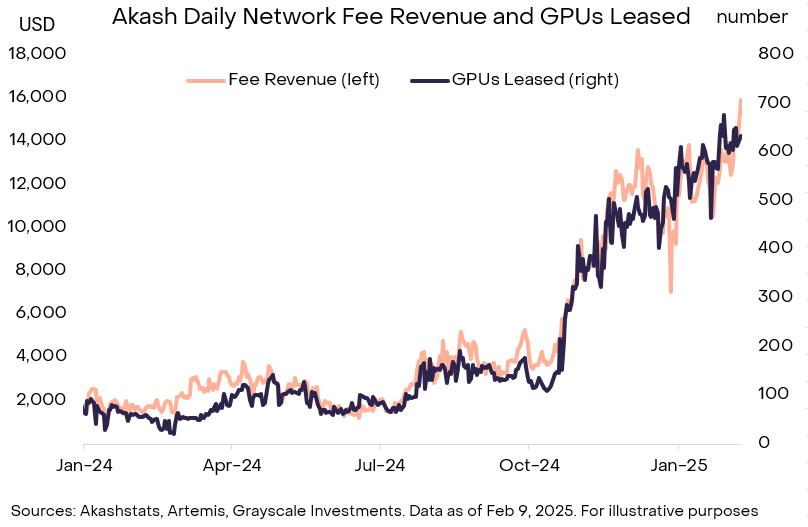
Akash Network operates as a permissionless, open-source marketplace for decentralized cloud compute. By leveraging the Cosmos SDK and Kubernetes, Akash allows providers to offer compute resources directly to consumers without intermediaries. This architecture ensures that anyone with available GPU capacity can list their resources, while users can bid for the best price-performance ratio.
Unlike specialized platforms, Akash’s general-purpose approach makes it suitable for a wide variety of workloads, including machine learning training, web hosting, and scientific computing. The platform’s transparency and open-source nature reduce the risk of vendor lock-in, appealing to developers who prioritize flexibility and control over their infrastructure.
For budget-conscious developers, Akash often provides the most cost-effective decentralized compute options. The competitive bidding model drives prices down, sometimes significantly below traditional cloud providers. However, this flexibility comes with a steeper learning curve, as users must manage their own containerized workloads and network configurations.
Comparing Render, Aethir, and Akash
The 2026 GPU market is defined by three dominant protocols: Render, Aethir, and Akash. Each targets a specific segment of the decentralized compute economy, offering distinct advantages over centralized cloud providers like AWS and Google Cloud. Research indicates these DePIN platforms can provide GPU resources at costs up to four times lower than traditional big tech equivalents, making them critical for budget-conscious AI developers and studios.
Render focuses on creative workloads, leveraging its established network for rendering and media processing. Aethir prioritizes enterprise-grade cloud gaming and AI inference with low-latency infrastructure. Akash operates as a general-purpose decentralized marketplace, offering the most flexible and cost-efficient compute for a wide range of computational tasks. Understanding these differences is essential for selecting the right protocol for your specific technical requirements.
The following table breaks down the key metrics for each protocol, including their primary use cases, underlying technology stacks, and market positioning. This comparison highlights how each project addresses the growing demand for decentralized GPU power.
| Protocol | Primary Focus | Tech Stack | Cost Advantage |
|---|---|---|---|
| Render | Creative Rendering & Media | Render Token (RNDR), Ethereum L2 | Up to 4x cheaper than AWS |
| Aethir | Enterprise AI & Cloud Gaming | Aethir Cloud, GPU Cluster Management | High-performance low-latency pricing |
| Akash | General Compute Marketplace | Cosmos SDK, Kubernetes | Most cost-effective decentralized compute |
Investing in decentralized GPU infrastructure
The DePIN sector has surpassed a $10 billion market capitalization, signaling a shift from experimental pilots to institutional-grade utility. As the broader GPU market expands toward a projected $104 billion valuation by 2026, decentralized networks like Render, Aethir, and Akash are capturing share from traditional cloud providers by offering cost-efficient compute for AI training and rendering.
Investing in these tokens requires distinguishing between speculative momentum and actual network utilization. Unlike traditional equities, DePIN valuations are heavily influenced by hash rate growth and real-time compute demand. High volatility remains a defining feature, with daily market cap swings often exceeding 5% as liquidity rotates between sectors. Investors must monitor on-chain metrics rather than relying solely on price action.
The competitive landscape is consolidating around a few key players with established enterprise partnerships. Render Network leads in decentralized rendering, while Aethir and Akash compete aggressively in the AI inference and training space. For those analyzing long-term viability, technical indicators provide a clearer picture of sector health than short-term price targets.
Frequently asked questions about the GPU market DePIN
How do Render, Aethir, and Akash differ in their target audiences? Render Network is optimized for creative professionals, specifically 3D artists and VFX studios needing scalable rendering power. Aethir targets enterprise clients and AI developers requiring high-performance, low-latency GPU clusters for training and inference. Akash serves a broad audience of developers and businesses seeking flexible, general-purpose cloud compute through an open-source marketplace.
What are the primary cost advantages of using DePIN for GPU compute? DePIN platforms typically offer costs up to four times lower than traditional cloud providers like AWS or Azure. This is achieved by aggregating underutilized GPU capacity from distributed providers, reducing overhead and eliminating the premium associated with centralized datacenter infrastructure. Akash often provides the lowest prices due to its competitive bidding model, while Render and Aethir may command higher rates for specialized, high-performance workloads.
What is the current market capitalization of the DePIN sector? The DePIN market capitalization fluctuates but currently sits around $9.19 billion to $9.35 billion, according to recent data from Forbes and CoinGecko. The sector has surpassed the $10 billion mark in recent assessments by Messari, indicating significant institutional interest in decentralized physical infrastructure. This growth is driven by increasing demand for decentralized compute, storage, and wireless networks.
How does the GPU market growth impact DePIN adoption? The global GPU market is valued at approximately $104.24 billion in 2026 and is forecast to reach $325.96 billion by 2031. Servers and datacenter accelerators are the primary growth drivers, expanding at a 27.78% CAGR as AI model training demands scale exponentially. This massive traditional market provides the tailwinds for decentralized GPU providers to capture share by offering a more flexible and cost-effective alternative to centralized cloud services.
No comments yet. Be the first to share your thoughts!