
The 2026 decentralized compute shift
The global demand for artificial intelligence compute power is outpacing the capacity of traditional cloud infrastructure. Data center GPU markets are projected to grow at a compound annual growth rate of 13.20% through 2034, with annual demand reaching approximately $304 billion by the end of the decade. This scarcity has created a pricing environment where centralized providers like Amazon Web Services and Google Cloud charge premiums that many developers and smaller AI labs cannot sustain.
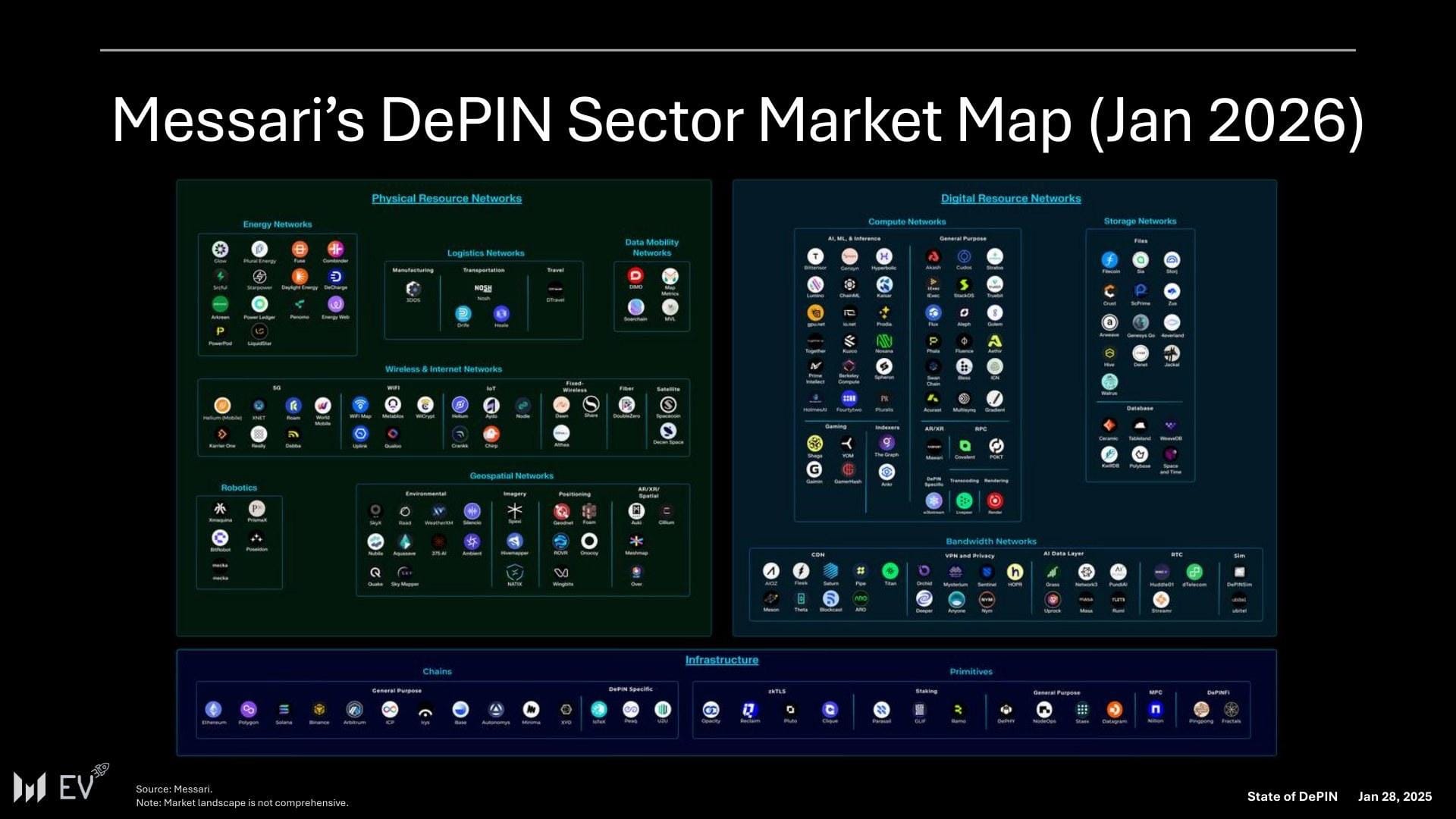
Decentralized Physical Infrastructure Networks (DePIN) have emerged as a structural alternative to this bottleneck. By aggregating idle GPU capacity from individual owners and smaller data centers, these networks offer compute resources at significantly lower costs. Industry analysis suggests that DePIN platforms can provide GPU resources over four times cheaper than major centralized cloud providers. This cost arbitrage is not merely a temporary discount but a fundamental shift in how AI infrastructure is procured and priced.
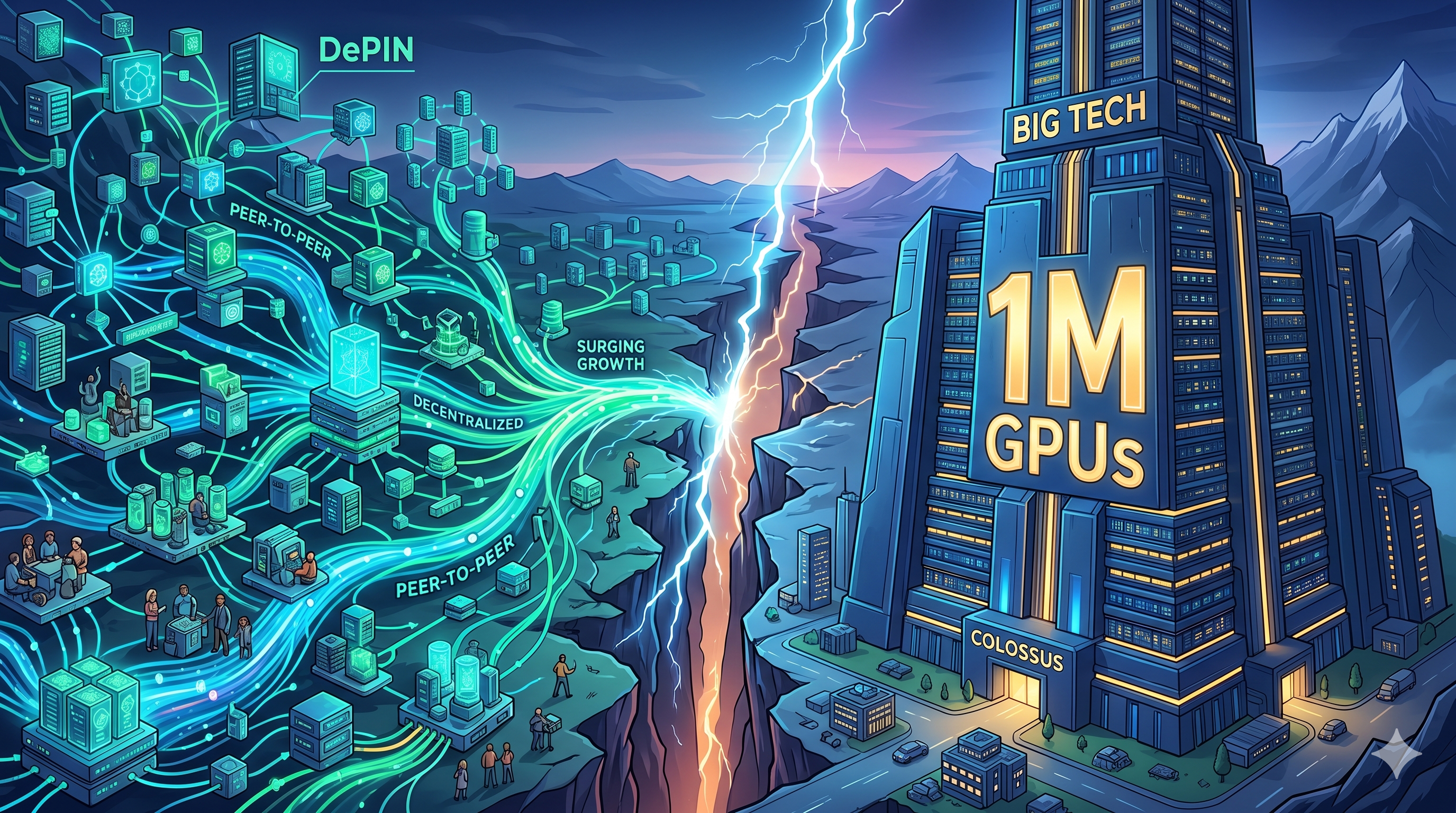
For investors and industry participants, this shift represents a move from centralized scarcity to distributed abundance. The market is no longer just about hardware availability; it is about the efficiency of the coordination layer that connects surplus compute with immediate demand. As the AI sector matures, the ability to access affordable, scalable compute will likely determine which projects can build and deploy models effectively.
The market sentiment around decentralized compute tokens often mirrors the broader AI hype cycles. Tracking the price action of leading DePIN assets can provide insight into how the market values this infrastructure shift. The following chart visualizes the recent performance of a leading decentralized compute token, reflecting investor interest in the sector's growth potential.
Top decentralized GPU networks compared
The decentralized GPU market is bifurcating into two distinct utility tracks: high-fidelity rendering and high-throughput AI training. Understanding this split is critical for evaluating network viability, as the hardware requirements and economic models for each differ significantly. Rendering networks prioritize visual fidelity and large texture storage, while AI compute networks demand massive parallel processing power and low-latency interconnects.
The following comparison outlines the primary architectural differences between the leading DePIN projects. This analysis focuses on their core use cases and technical differentiators to help investors assess which infrastructure layer offers the most durable value proposition in the 2026 market cycle.
| Project | Ticker | Primary Use Case | Key Differentiator |
|---|---|---|---|
| Render Network | RNDR | 3D Rendering & Media | Established partnerships with major media studios; optimized for high-fidelity visual output. |
| Akash Network | AKT | AI Training & Inference | Open-source cloud marketplace; offers the lowest cost per GPU hour through competitive bidding. |
| io.net | IO | AI Model Training | Aggregates unused GPU capacity from consumer and enterprise sources; focuses on scalability. |
| Golem Network | GLM | Distributed Computing | Versatile compute framework; supports both rendering and general-purpose AI workloads. |
Render Network has carved out a dominant position in the creative economy by partnering directly with production studios. Its focus on visual fidelity makes it less susceptible to the commodity pricing pressures affecting raw compute power. In contrast, Akash and io.net compete in the AI infrastructure layer, where demand is growing exponentially but margins are thinner due to the commoditization of GPU hours.
For investors, the choice between these networks depends on risk tolerance. Rendering networks offer more predictable, contract-based revenue streams, while AI compute networks offer higher growth potential but face greater volatility as hardware supply fluctuates. The table above provides a baseline for comparing these structural advantages.
Pricing advantages over centralized clouds
The primary driver for enterprise migration to decentralized AI compute is the stark cost differential between traditional hyperscalers and distributed hardware aggregators. Current market data indicates that DePIN projects can provide GPU resources at prices over four times cheaper than major centralized providers like Google Cloud and Amazon Web Services (AWS). This arbitrage is not a temporary promotional discount but a structural advantage resulting from the utilization of underutilized, idle hardware that would otherwise sit dormant.
For high-stakes AI training and inference workloads, this pricing structure fundamentally alters the unit economics of machine learning development. Enterprises are no longer bound by the rigid, premium pricing models of centralized cloud providers, allowing them to scale compute-intensive tasks without the proportional increase in operational expenditure. The savings are particularly significant for long-running training jobs, where hours of GPU time accumulate into substantial budget items.
The liquidity and valuation of these decentralized networks are reflected in their token markets. Assets like RENDER serve as the economic layer for accessing this compute, with their market performance indicating investor confidence in the long-term viability of decentralized infrastructure. As the data center GPU market continues to grow, the efficiency gains from decentralized sourcing offer a hedge against the inflationary pressures typically associated with centralized cloud pricing.
This cost advantage does not come without trade-offs. Enterprises must weigh the financial benefits against potential latency variations and the need for robust fault tolerance in decentralized architectures. However, for non-latency-sensitive workloads such as batch processing, rendering, and model training, the economic argument for decentralized compute is becoming increasingly difficult to ignore.
Network Reliability and Latency
The primary barrier to production-grade adoption in decentralized AI compute remains latency and reliability. While centralized cloud providers like AWS and GCP offer predictable, low-latency performance through dedicated infrastructure, DePIN networks operate on heterogeneous hardware distributed globally. This variance introduces inherent risks for workloads requiring strict Service Level Agreements (SLAs).
Current benchmarks indicate that while DePIN networks have closed the gap significantly, they still trail centralized hyperscalers in consistent throughput. For inference tasks, latency variations can exceed 20-30% compared to dedicated cloud instances, depending on the node's proximity to the user and its current load. This makes immediate, real-time applications—such as interactive AI agents or high-frequency trading models—more challenging to deploy without sophisticated orchestration layers.
However, the architecture is evolving. Newer networks are implementing predictive node selection algorithms that prioritize stability over raw cost savings. These systems dynamically route requests to nodes with proven uptime records, effectively creating a virtualized layer of reliability that mimics traditional cloud behavior. For batch processing and model training, where latency is less critical than throughput, DePIN networks now offer a viable, cost-effective alternative that rivals the reliability of major cloud providers.
How to participate in GPU rental protocols
Participating in decentralized AI compute networks requires a clear operational workflow. Whether you are renting high-performance GPUs for training or contributing idle hardware to earn yield, the process follows a standardized protocol. Success depends on matching your technical capabilities with the specific requirements of the network.
Evaluate networks like Render, Akash, or io.net based on your hardware specifications. Providers typically require specific GPU models (e.g., NVIDIA A100, RTX 3090) and stable internet connections. Verify the network’s current liquidity and demand to ensure your contribution or rental request will be fulfilled.
Create a non-custodial wallet compatible with the network’s blockchain (e.g., Ethereum, Solana, or Cosmos). Fund the wallet with the native token to cover gas fees and initial staking requirements. Security is paramount; use a hardware wallet for significant capital exposure to mitigate smart contract risks.

Download the official provider client from the network’s GitHub repository. Configure the node to recognize your GPU hardware and set up remote access keys for verification. Run diagnostic tests to ensure your system meets the bandwidth and compute benchmarks required by the network.
Link your wallet to the network’s dashboard. Complete any required KYC (Know Your Customer) procedures if mandated by the protocol. Verify your node status in the explorer to confirm it is actively listening for jobs or rental requests.
Track your node’s uptime and job completion rates via the provider dashboard. Payouts are typically distributed automatically to your wallet upon successful verification of compute tasks. Regularly update your software to maintain compatibility with network protocol upgrades.
Common questions about DePIN investing
Investing in decentralized physical infrastructure networks (DePIN) requires understanding both the underlying hardware demand and the token mechanics. As the market evolves, clarity on forecasts and entry methods becomes essential for managing risk.
What is the GPU market forecast?
The demand for data center GPUs is projected to expand significantly through the next decade. Stratview Research forecasts a compound annual growth rate (CAGR) of 13.20% from 2026 to 2034. By 2034, annual demand is expected to reach $304.26 billion, with a cumulative sales opportunity of $1.77 trillion. This growth is driven by AI workloads that require massive parallel processing power.
How to invest in DePIN?
The primary method for gaining exposure is purchasing DePIN tokens on cryptocurrency exchanges. These platforms facilitate the trading of digital assets representing shares in decentralized networks. Investors should verify the liquidity and regulatory compliance of the exchange before executing trades, as token volatility can be high.
What are DePIN miners?
DePIN miners are specialized hardware devices optimized for participating in decentralized networks. Unlike traditional crypto mining, these devices often provide real-world services, such as GPU compute power for AI training or wireless connectivity. They enable participants to earn rewards by contributing physical resources to the network infrastructure.
No comments yet. Be the first to share your thoughts!