
DePIN market cap hits $10 billion
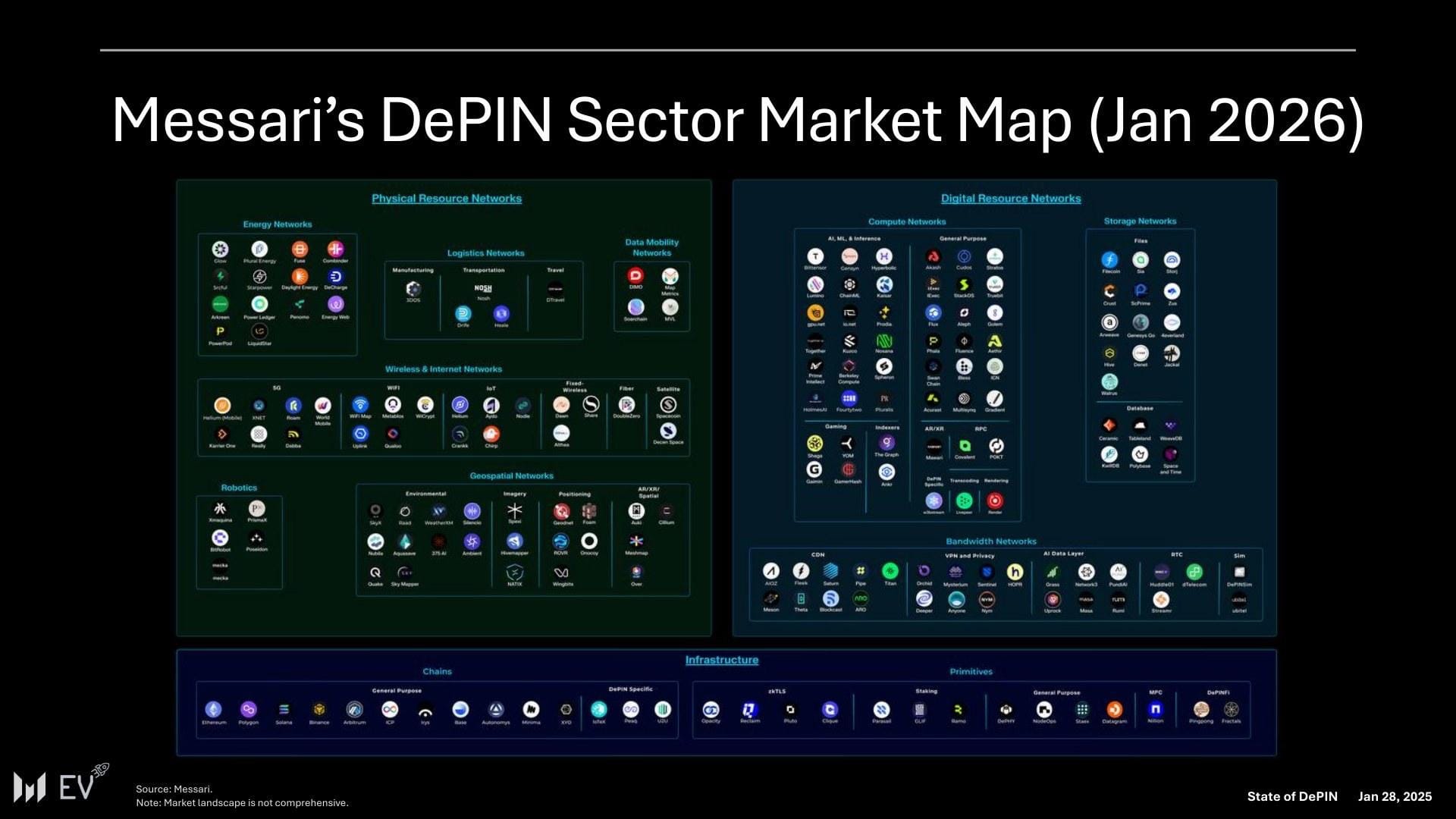
The decentralized physical infrastructure network (DePIN) sector has reached a major valuation milestone, with combined market capitalization surging to $9–10 billion in early 2026. This growth surpasses the oracles sector and demonstrates the rapid adoption of decentralized compute resources, particularly within the GPU market DePIN.
This expansion is driven by projects that allow users to rent out idle GPU power for AI training and rendering tasks. As these networks generate over $150 million in on-chain monthly revenue, they are proving that decentralized infrastructure can compete with traditional cloud providers on both scale and cost.
The sector's momentum is visible across major crypto data aggregators. CoinGecko currently lists the DePIN market cap at approximately $7.77 billion, reflecting the volatile but upward trajectory of assets tied to real-world compute power.
While traditional GPU manufacturers like NVIDIA still dominate the hardware side with 94% market share, the software and tokenization layer is shifting. The GPU market DePIN is no longer just an experimental concept; it is a growing economic force that is reshaping how compute resources are valued and distributed.
Why decentralized rendering beats cloud pricing
The primary economic driver reshaping the GPU market DePIN landscape is cost efficiency. Decentralized aggregators offer GPU resources at significantly lower rates than centralized hyperscalers like AWS and Google Cloud. This price advantage makes decentralized networks highly attractive for compute-intensive tasks such as AI training and high-fidelity rendering.
DePIN projects aggregate millions of GPUs sitting idle worldwide to compete directly with traditional cloud providers. By tapping into this distributed capacity, platforms like Render, Aethir, and Akash can offer services that are often over 4 times cheaper than major enterprise clouds. This arbitrage allows startups and independent developers to access high-performance hardware without the premium pricing associated with centralized data centers.
The table below compares key metrics across leading decentralized networks and traditional cloud infrastructure. This comparison highlights the substantial cost differences and distinct use cases that define the current market dynamic.
| Provider | Relative Cost | Availability | Best Use Case |
|---|---|---|---|
| AWS | High | Centralized | Enterprise legacy apps |
| Google Cloud | High | Centralized | Large-scale ML ops |
| Render Network | Low | Global decentralized | 3D rendering & VFX |
| Aethir | Low | Global decentralized | AI training & inference |
| Akash | Low | Global decentralized | General cloud compute |
Render Network leads decentralized rendering
Render Network established itself as the first decentralized GPU rendering platform, bridging the gap between creative professionals and underutilized computing power. By allowing artists to scale rendering work on-demand, the network addresses the high costs and hardware bottlenecks that traditionally limit production pipelines. This model is increasingly relevant as the broader GPU market DePIN sector seeks to distribute workload across global node providers rather than relying on centralized data centers.
The platform’s architecture connects content creators with node operators who provide the necessary GPU capacity. This on-demand scaling allows studios to access high-performance computing for complex 3D rendering tasks without capital expenditure on physical hardware. As AI development accelerates, Render Network has expanded its utility beyond traditional graphics rendering to support machine learning workloads, positioning itself as a critical infrastructure layer for the decentralized compute economy.
The network’s economic model relies on its native token to facilitate transactions between requesters and node operators. Tokenomics are designed to incentivize node providers to maintain high uptime and performance standards while ensuring fair pricing for users. Investors track the token’s market dynamics as a barometer for demand in the decentralized rendering space, though volatility remains a factor in assessing long-term viability.
Aethir and Akash compete for AI workloads
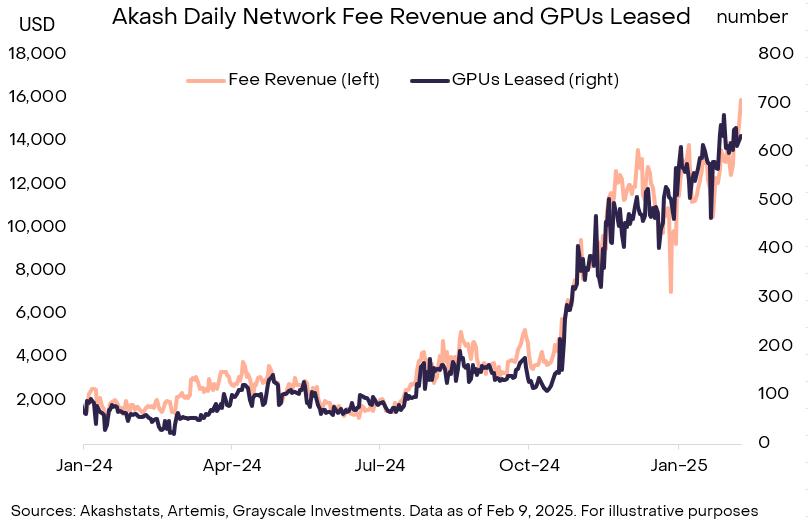
The GPU market DePIN landscape is currently defined by a rivalry between Aethir and Akash, two networks that have carved out distinct niches in decentralized compute. As the DePIN sector’s combined market cap surged to $9–10 billion in early 2026, these platforms have emerged as primary contenders for AI training and inference tasks, offering alternatives to centralized cloud providers. Their competition is not just about price, but about architectural efficiency and reliability for high-performance computing.
Aethir: Real-Time GPU Cloud
Aethir positions itself as a real-time GPU cloud, focusing heavily on the latency-sensitive demands of AI inference and cloud gaming. By aggregating underutilized GPU capacity from data centers and edge nodes, Aethir aims to provide the low-latency performance required for live AI applications. Its architecture prioritizes speed and stability, making it a preferred choice for developers who need immediate, scalable compute power without the provisioning delays of traditional cloud infrastructure.
Akash: Decentralized Marketplace
Akash operates as a decentralized marketplace, leveraging a bid-based model that allows users to source compute resources from a global network of providers. This approach often results in significant cost savings compared to centralized equivalents, attracting a broad base of users ranging from individual developers to large-scale AI research teams. Akash’s open-source ethos and flexible deployment options make it a versatile platform for diverse AI workloads, particularly those that are less sensitive to microsecond latency.
Token Performance
Investor interest in both projects is reflected in the performance of their native tokens. ATH (Aethir) and AKT (Akash) track the broader market sentiment toward DePIN infrastructure, with their values fluctuating based on network adoption and broader crypto market trends.
Technical trends in GPU DePIN infrastructure
The technical maturity of decentralized GPU networks hinges on their ability to bridge the gap between experimental crypto protocols and production-grade AI workloads. While the global DePIN market is projected to grow from $265 million in 2025 to $669 million by 2032, the underlying infrastructure must prove it can match the reliability and user experience of established centralized providers. This shift requires solving complex challenges in latency, hardware fragmentation, and consistent compute delivery.
Reliability remains the primary hurdle for GPU market DePIN adoption. Unlike centralized data centers with redundant power and cooling, decentralized nodes vary wildly in stability. Networks must implement sophisticated orchestration layers to detect offline nodes and reroute tasks without interrupting training jobs. This technical overhead is essential to convince enterprise clients who cannot afford the downtime associated with consumer-grade hardware.
User experience has evolved from simple token rewards to seamless API integrations. Early DePIN projects required users to manage wallets and verify hashes manually, creating friction that deterred developers. Modern platforms abstract these complexities, allowing AI researchers to request GPU instances through standard cloud interfaces. This abstraction layer is critical for competing with AWS and Azure, where compute provisioning is instantaneous and predictable.
Regulatory uncertainty adds another layer of technical complexity, particularly around how token compensation models are structured. As networks scale globally, they must navigate varying data sovereignty laws and cryptographic export controls. Successful DePIN architectures are beginning to incorporate compliance-friendly design patterns, such as zero-knowledge proofs for node verification, to ensure regulatory alignment without sacrificing decentralization.
No comments yet. Be the first to share your thoughts!