
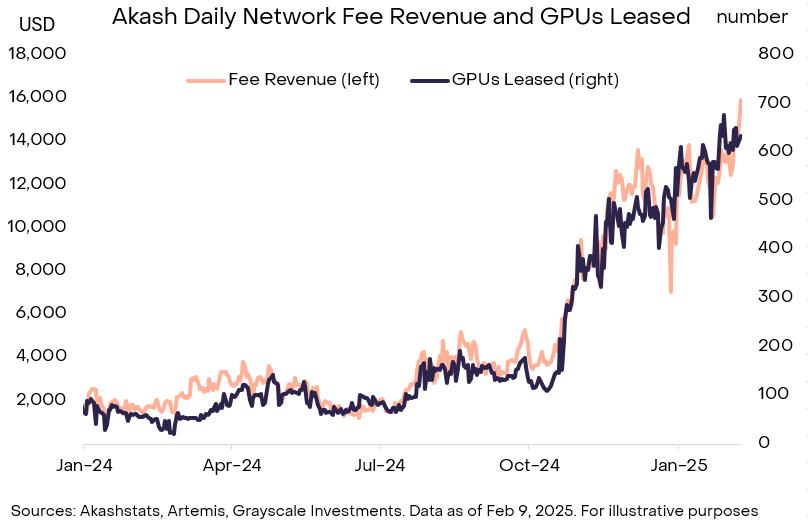
How decentralized compute cuts cloud costs
The primary economic driver for GPU DePIN networks is the stark price differential between decentralized nodes and centralized hyperscalers. Research indicates that DePIN projects can provide GPU resources at rates over 4 times cheaper than major providers like Google Cloud and Amazon Web Services (AWS) [[src-serp-2]]. This arbitrage is not a temporary discount; it is structural, resulting from the distributed capital expenditure model where individual operators purchase and deploy their own hardware [[src-3]].
In a traditional cloud model, providers recoup massive infrastructure investments through high per-hour compute fees. DePIN networks bypass this by aggregating underutilized or purpose-built hardware from a global pool of independent operators. This distribution of costs allows the network to scale rapidly without the financial bottlenecks that constrain traditional corporations, offering a leaner alternative for AI training and inference workloads [[src-3]].
However, this cost advantage comes with distinct risks that require due diligence. While the headline price is lower, enterprise adoption faces hurdles regarding reliability, service level agreements (SLAs), and procurement compliance [[src-serp-6]]. Decentralized compute lacks the guaranteed uptime and legal recourse of a single corporate entity, meaning users must weigh the savings against potential latency and fragmentation in node availability. For 2026, the market is shifting from pure cost arbitrage to a balance of affordability and operational reliability.
Render Network
Render Network operates as the first decentralized GPU rendering platform, connecting artists and studios with a distributed pool of high-performance nodes. By leveraging idle compute power, the network allows creators to scale rendering workloads on-demand without the capital expenditure required to build and maintain local data centers. This model directly addresses the bottleneck of centralized rendering farms, offering a more flexible infrastructure for 3D animation, visual effects, and AI training.
The protocol’s architecture relies on a robust node network where operators contribute GPU resources in exchange for RNDR token rewards. For studios, this translates to reduced costs and faster turnaround times, as workloads can be distributed across thousands of nodes globally. The network supports industry-standard rendering engines, ensuring compatibility with existing creative workflows while providing the elasticity needed for peak production periods.
Investing in Render requires assessing the stability of its node supply and the utility demand from its user base. The value accrual mechanism is tied to the actual compute services rendered, making the token’s performance dependent on the network’s adoption by professional creative industries. Due diligence should focus on the growth of active nodes and the volume of rendering jobs processed, as these metrics indicate the network’s real-world utility and revenue generation potential.
Aethir: Infrastructure for AI Training Clusters
Aethir distinguishes itself in the decentralized GPU market by focusing on high-performance computing (HPC) and AI model training rather than traditional media rendering. While other protocols serve as passive storage or rendering farms, Aethir positions itself as a real-time, high-throughput cloud for AI workloads. This distinction is critical for investors evaluating which DePIN protocols capture the largest share of the expanding AI compute market.
The network aggregates enterprise-grade NVIDIA GPUs, including H100 and A100 variants, to form distributed clusters capable of handling complex machine learning tasks. By leveraging a specialized software stack, Aethir ensures low latency and high bandwidth between nodes, addressing the primary bottleneck of decentralized compute: network overhead. This infrastructure allows AI developers to access scalable training power without the capital expenditure of building proprietary data centers.
From a risk perspective, the hardware costs associated with maintaining H100 clusters are substantial. Investors must scrutinize Aethir’s node operator economics to ensure that staking rewards and compute fees can sustainably cover hardware depreciation and energy costs. The protocol’s reliance on high-end hardware creates a higher barrier to entry for node operators but also creates a moat against cheaper, lower-tier competitors.
The following image illustrates the broader DePIN landscape, highlighting the shift from simple resource mapping to complex infrastructure deployment.
Aethir’s ATH token performance reflects the market’s interest in specialized AI infrastructure. Traders should monitor technical indicators to assess volatility relative to broader crypto market trends.
Akash: The Flexible Cloud Marketplace
Akash Network operates as an open-source, decentralized cloud computing marketplace. Unlike specialized GPU-focused protocols that target singular workloads, Akash leverages Kubernetes to offer broad compute flexibility. This architecture allows users to deploy a wide range of applications, from web hosting to complex AI inference models, on a global network of independent data centers.
The platform’s core value proposition lies in its ability to reduce infrastructure costs by connecting buyers with underutilized server capacity. By treating compute resources as a commodity, Akash creates a competitive market where prices are driven by supply and demand rather than the fixed pricing models of traditional cloud providers. This approach appeals to developers and enterprises seeking to optimize capital expenditure without sacrificing performance.
However, the decentralized nature of the network introduces specific risks. Users must conduct due diligence on the reliability of individual compute providers, as hardware failures or network outages can impact application uptime. The open-source model also means that security and maintenance are distributed across the community, requiring users to verify the integrity of the software stacks they deploy.
For organizations with variable workloads, Akash offers a scalable alternative to rigid cloud contracts. The platform supports a variety of containerized applications, making it suitable for businesses that need to scale resources up or down quickly. While it may not be the primary choice for specialized, high-performance GPU rendering, its versatility makes it a critical component in a diversified DePIN strategy.
Compare Top DePIN GPU Networks
Render, Aethir, and Akash dominate the decentralized compute landscape, yet each serves distinct operational needs. Render targets media rendering and AI inference with high stability, Aethir focuses on cloud gaming and real-time AI with low latency, while Akash offers a decentralized marketplace for general-purpose compute at competitive rates. Selecting the right protocol requires aligning your workload with their specific architectural strengths.
| Network | Primary Focus | Token | Key Advantage |
|---|---|---|---|
| Render | Rendering & AI Inference | RNDR | Established ecosystem for creative workflows |
| Aethir | Cloud Gaming & Real-time AI | ATH | Low-latency edge infrastructure |
| Akash | General Compute Marketplace | AKT | Cost-effective decentralized bidding |
Essential hardware for running GPU nodes
Node operators must balance capital expenditure against the specific compute demands of Render, Aethir, and Akash. While enterprise-grade datacenter GPUs offer raw power, the cost of entry and energy consumption often erode profit margins for individual operators. The most viable entry points typically lie in high-end consumer cards or refurbished professional hardware, provided the node can maintain thermal stability and consistent uptime.
Reliability is the primary risk factor. A single node failure can result in missed rewards or penalties depending on the protocol's slashing conditions. Operators should prioritize GPUs with robust VRAM capacities to handle large language model inference tasks, which are becoming the standard workload for AI-focused DePINs. Additionally, ensuring adequate cooling infrastructure is critical, as thermal throttling directly reduces hash rate and revenue potential.
The following products represent the current market standards for accessible GPU node hardware. These selections focus on performance-per-dollar ratios suitable for decentralized compute networks.


As an Amazon Associate, we may earn from qualifying purchases.
Frequently asked questions about DePIN GPUs
Is DePIN a blockchain?
Yes. DePIN (Decentralized Physical Infrastructure Networks) are blockchain-based systems that use token rewards to incentivize individuals to contribute real-world physical resources — such as computing power, wireless connectivity, storage, or energy — to a shared network. This architecture allows protocols like Render, Aethir, and Akash to coordinate hardware without central ownership.
What problems does DePIN solve?
DePIN eliminates centralized capital expenditures by distributing costs among network participants. Because individual operators purchase and deploy their own hardware, the network can scale rapidly without the financial bottlenecks that constrain traditional cloud providers. This model reduces the upfront barrier to entry for accessing high-performance GPU clusters.
What is the GPU market worth?
The global GPU market size was recorded at $20.815 billion in 2021 and is projected to reach $51.8 billion by the end of 2025. According to market analysis, the sector will grow at a CAGR of 25.6% during the 2025 to 2033 period, potentially reaching $320.809 billion by 2033. This rapid expansion underscores the growing demand for decentralized compute resources.
No comments yet. Be the first to share your thoughts!