
How to start earning with GPU DePIN
Setting up a node for decentralized AI compute requires a specific hardware stack and a compatible wallet. You can earn between $3.00 and $7.00 per day with an NVIDIA RTX 4090, depending on network demand and token price [[src-serp-4]]. Follow these steps to get your first node running.
Most networks require NVIDIA GPUs with at least 16GB of VRAM. The RTX 4090 and A100 are common choices for AI workloads. Ensure your GPU drivers are up to date and your PC has sufficient cooling for sustained load.
Create a wallet compatible with the target network. For most DePIN projects, a MetaMask wallet connected to the appropriate blockchain (often Ethereum or Solana) is necessary to receive token rewards. Secure your seed phrase offline.
Download the official node software from the project’s documentation. This software manages the connection between your GPU and the network. Follow the installation guide to configure your node’s settings and connect your wallet.
Once the node is active, monitor your earnings through the project’s dashboard. Payouts are typically distributed automatically to your wallet based on the compute you provide. Check the project’s FAQ for minimum payout thresholds.


As an Amazon Associate, we may earn from qualifying purchases.
5 GPU DePIN Networks for Decentralized AI Compute in 2026
The 2026 decentralized AI compute landscape relies on specific hardware configurations, prominently featuring NVIDIA RTX 4090 and A100 units within leading DePIN protocols. This selection highlights five networks validated by Coincub and Quicknode data for their current infrastructure capacity.
1. render network leads gpu rendering
Render Network connects GPU providers with users needing high-performance rendering. It supports complex 3D workloads and AI training tasks across its decentralized grid. The platform leverages idle hardware to create a scalable infrastructure for creative professionals and developers seeking cost-effective computational power without central server dependencies.

2. io.net aggregates massive gpu pools
io.net aggregates thousands of GPUs into a single, unified pool for developers. It simplifies access to distributed compute resources by handling the underlying complexity of node management. Users can spin up instances quickly, making it easier to run large-scale machine learning jobs without managing individual hardware connections or network latency issues.

3. aethir targets enterprise cloud demand
Aethir focuses on providing enterprise-grade decentralized cloud computing services. It offers certified GPUs like the H200 for demanding AI workloads, ensuring reliability and performance comparable to traditional cloud providers. This approach appeals to businesses requiring strict SLAs and high-throughput capabilities for training large language models or running inference pipelines.

4. nosana powers solana ai workloads
Nosana operates on the Solana blockchain, offering a decentralized marketplace for GPU compute. It is designed to handle AI inference and training tasks with high throughput and low latency, leveraging Solana’s speed. Developers can access affordable compute resources for running AI models, benefiting from the ecosystem’s rapid transaction finality and growing developer base.

5. fluence offers decentralized compute
Fluence provides a decentralized cloud platform that allows users to rent GPU power directly. It emphasizes transparency and cost-efficiency by removing intermediaries from the compute rental process. Users can deploy applications on a global network of nodes, ensuring data sovereignty and reducing costs compared to centralized cloud providers while maintaining high availability.

What is gpu depin in 2026
GPU DePIN (Decentralized Physical Infrastructure Networks) connects idle consumer and data center graphics cards to AI training and rendering workloads. Instead of relying solely on centralized cloud providers like AWS or Azure, these networks aggregate fragmented computing power into a single, accessible pool.
The model turns hardware like the NVIDIA RTX 4090 or A100 into rentable assets. Owners earn tokens by leasing their GPUs to developers who need compute for machine learning models, 3D rendering, or large language model inference. This creates a marketplace where supply and demand for compute meet without traditional infrastructure middlemen.
Enterprise adoption in 2026 focuses on cost efficiency and flexibility. According to Coincub, DePIN offers a cheaper alternative for AI compute, though it still faces hurdles regarding reliability and service level agreements (SLAs) compared to established cloud giants. The infrastructure is becoming a viable secondary option for projects that can tolerate slight latency variations in exchange for lower costs.


As an Amazon Associate, we may earn from qualifying purchases.
Compare top GPU DePIN networks
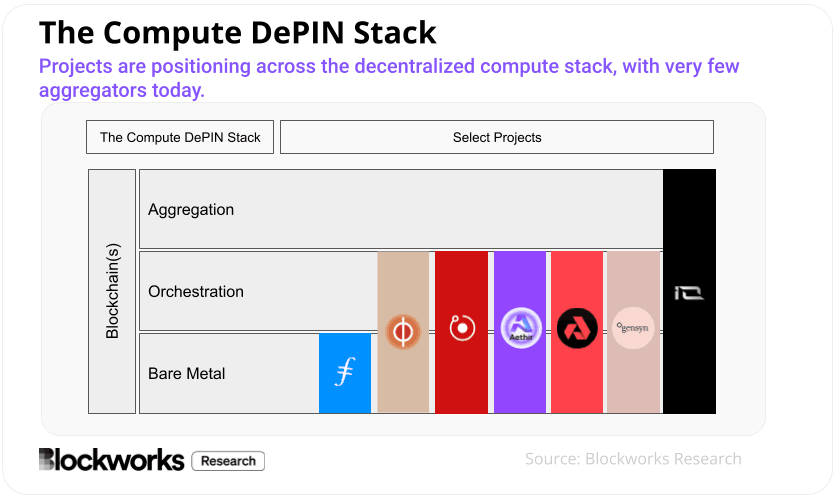
Choosing the right network depends on your specific hardware and workload. Render, io.net, Aethir, Nosana, and Fluence each serve distinct purposes, from media rendering to real-time AI inference. The table below breaks down the core differences in tokenomics, primary use cases, and hardware entry barriers.
| Network | Token | Primary Use Case | Hardware Entry Barrier |
|---|---|---|---|
| Render | RNDR | 3D rendering, video processing | Mid-range GPUs (GTX 1060+) |
| io.net | IO | AI training, ML workloads | High-end GPUs (RTX 3090/4090) |
| Aethir | ATH | Real-time AI inference | Enterprise-grade (A100, H100) |
| Nosana | NOS | Solana-based AI inference | Consumer GPUs (RTX 30-series+) |
| Fluence | FLU | Decentralized GPU compute | Varied (Cloud & Consumer) |
Render Network remains the standard for creative workloads, accepting a wide range of consumer hardware. io.net aggregates idle GPUs for heavy machine learning tasks, requiring more powerful cards. Aethir focuses on enterprise-grade clusters for low-latency inference, while Nosana is optimized for the Solana ecosystem. Fluence offers a hybrid approach, supporting both cloud providers and individual GPU owners.
No comments yet. Be the first to share your thoughts!