
Why GPU DePIN Matters Now
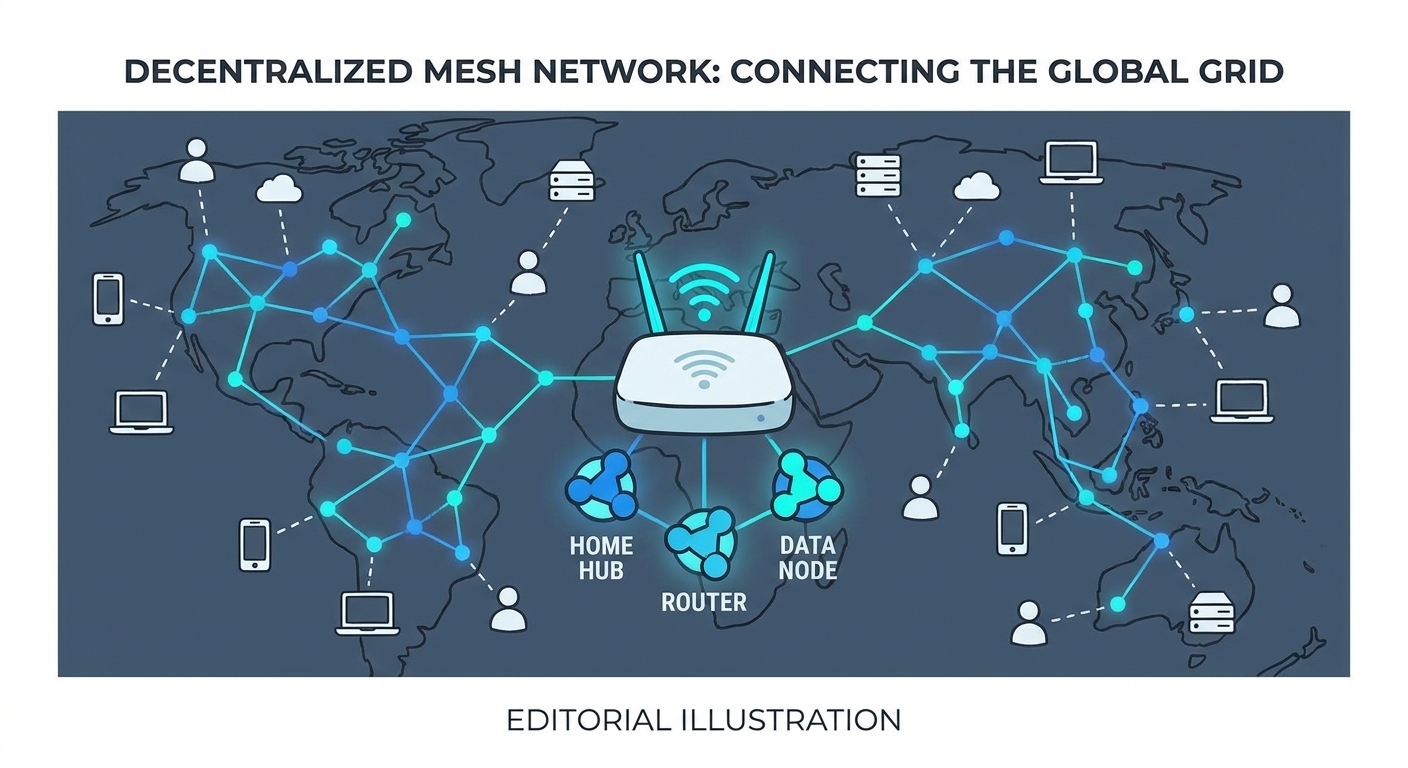
Decentralized Physical Infrastructure Networks (DePIN) are fundamentally altering the economics of high-performance computing. By aggregating idle GPU capacity from individual providers rather than relying on massive, centralized data centers, these networks offer a significantly cheaper alternative to traditional cloud providers. This cost advantage is the primary driver for AI startups and rendering farms seeking to scale without prohibitive capital expenditure.
The financial gap between centralized and decentralized models is substantial. Industry analysis indicates that DePIN projects can provide GPU resources at over four times the cost efficiency of major cloud giants like Google Cloud and Amazon Web Services (AWS) [src-serp-2]. For workloads that are compute-intensive but not latency-critical, this differential translates directly into higher margins or extended runway for early-stage companies.
This shift moves infrastructure from a capital expenditure model to a variable cost structure. Instead of buying hardware that may sit underutilized, networks use token incentives to attract supply from the periphery. When demand rises, the market determines supply expansion organically, reducing the need for massive upfront infrastructure investment [src-serp-7].
However, this economic thesis relies on the reliability of distributed hardware. While the price per compute hour is lower, users must account for potential variability in network stability. The trade-off is clear: you pay less for flexibility, but you accept a different risk profile regarding uptime and hardware consistency compared to enterprise-grade centralized clouds.
Render Network Tokenomics
Render Network (RENDER) operates as the foundational layer for decentralized graphics processing, allowing users to access high-performance GPU compute without the capital expenditure of dedicated hardware. The network functions as a bridge between content creators and node operators, creating a marketplace where idle GPU power is converted into rendering tasks. This model mirrors the utility of traditional cloud providers but distributes the infrastructure globally, reducing reliance on centralized data centers.
The token serves as the primary medium of exchange within this ecosystem. Node operators earn RENDER tokens by contributing their hardware resources to the network, while clients pay for rendering services using the same token. This dual-utility structure ensures that demand for compute directly drives demand for the asset. The token is not merely a speculative vehicle; it is the necessary fuel for the network's operational economy, aligning the incentives of supply and demand.
Node requirements are designed to balance accessibility with performance standards. Operators must maintain specific hardware configurations to ensure task completion times meet network expectations. This creates a barrier to entry that protects the quality of service, distinguishing Render from networks that prioritize quantity over compute reliability. As AI workloads increasingly require parallel processing, Render’s focus on rendering and now AI inference positions it as a critical infrastructure provider in the DePIN sector.
The network’s market position is defined by its first-mover advantage in decentralized rendering. By establishing a proven track record of task completion and node reliability, Render has secured partnerships with major studios and developers. This institutional adoption validates the token’s utility and provides a floor for its economic value, separate from broader crypto market volatility.
Aethir Enterprise GPU Cloud
Aethir (ATH) positions itself as the enterprise-grade backbone for high-performance computing, targeting a segment of the GPU DePIN market that prioritizes reliability over speculative yield. Unlike consumer-focused networks that aggregate fragmented consumer hardware, Aethir operates a centralized cloud model that aggregates data center resources into a unified, bare-metal infrastructure. This approach is designed to meet the strict latency and uptime requirements of AI training, inference, and cloud gaming.
The core differentiator is its focus on bare-metal access. For AI workloads, virtualization overhead can significantly degrade performance, particularly when handling large language models or complex simulations. By providing direct access to the underlying hardware, Aethir ensures that enterprises can leverage the full potential of NVIDIA GPUs without the bottlenecks often associated with multi-tenant virtual environments. This mirrors the infrastructure requirements highlighted by industry analysts who note that high-end DePIN compute tasks demand dedicated resources, such as the X-Large tier configurations featuring eight NVIDIA H100 GPUs with 640GB of HBM3 memory per server.
This enterprise focus creates a distinct value proposition for ATH. While other networks compete on price and decentralization metrics, Aethir competes on service level agreements (SLAs) and infrastructure quality. This strategy appeals to institutional clients and AI startups that cannot afford the variability of purely decentralized, peer-to-peer compute markets. The network’s ability to guarantee performance and security makes it a viable alternative to traditional hyperscalers for specific high-compute tasks.
io.net and Decentralized Compute Scaling
io.net operates as a decentralized GPU network designed to aggregate idle graphics processing power for AI-native workloads. By pooling resources from individual node operators, the platform creates a scalable compute layer that aims to undercut traditional cloud pricing. This model addresses the critical bottleneck in artificial intelligence development: access to affordable, high-performance hardware.
The network’s architecture relies on a validation layer to ensure node reliability and task completion. While this approach offers significant cost advantages, it introduces complex scaling challenges related to latency and hardware heterogeneity. io.net must balance the flexibility of distributed compute with the strict performance requirements of large language model training and inference tasks.
Market participants view io.net as a key player in the infrastructure layer of decentralized physical infrastructure networks (DePIN). Its success depends on maintaining a robust supply of GPU nodes while delivering consistent performance to enterprise clients seeking alternatives to hyperscale providers.
Comparing GPU DePIN Platforms
Render, Aethir, and io.net represent the leading infrastructure layers for decentralized GPU computing. While all three leverage idle hardware to lower costs, their architectural approaches and target workloads differ significantly. Understanding these distinctions is essential for developers and investors assessing risk and utility.
Render focuses on high-fidelity rendering and AI training, utilizing a node-based model that prioritizes reliability for creative workflows. Aethir targets enterprise-grade AI inference with a hybrid cloud model, offering bare-metal access and low-latency connections for sensitive workloads. io.net aggregates consumer-grade GPUs, creating a massive, cost-effective pool ideal for large-scale training jobs where hardware heterogeneity is manageable.
The table below contrasts their core hardware tiers, primary use cases, and token utilities.
| Platform | Hardware Tier | Primary Use Case | Token Symbol |
|---|---|---|---|
| Render | Consumer & Prosumer GPUs | 3D Rendering & AI Training | RNDR |
| Aethir | Enterprise & Cloud GPUs | AI Inference & Cloud Gaming | ATH |
| io.net | Aggregated Consumer GPUs | Large-Scale ML Training | IO |
Market Performance and Charts
The GPU DePIN sector has shifted from speculative infrastructure narratives to tangible utility, with token prices reflecting the growing demand for decentralized compute. Render (RNDR), Aethir (ATH), and io.net serve as the primary benchmarks for this asset class, tracking closely with broader crypto market sentiment and AI infrastructure adoption rates.
Price action in this niche is characterized by high volatility, driven by news cycles surrounding enterprise partnerships and network utilization metrics. Unlike established layer-1 blockchains, these tokens often experience amplified swings as capital rotates between high-yield DePIN projects and safer blue-chip assets. Investors must monitor on-chain data for actual GPU hours rendered, as token utility increasingly decouples from mere speculation.
To visualize these trends, we track RENDER/USD against key technical indicators. This chart highlights the recent price action and volume profiles, offering a clear view of support and resistance levels for the leading GPU DePIN token.
FAQs on Decentralized GPU Compute
What crypto can still be mined with GPU? Traditional proof-of-work coins like Bitcoin and Ethereum are no longer mineable with consumer GPUs. The market has shifted toward algorithms that remain profitable for graphics cards, such as Ergo (ERG), Ravencoin (RVN), and Kaspa (KAS). However, the rise of DePIN networks has created a new category of "GPU mining" where hardware is rented for AI inference rather than securing a blockchain ledger.
Which technology is core to DePIN systems? DePIN infrastructure relies on the intersection of blockchain technology and tokenized incentives. These networks use smart contracts to verify hardware contributions and distribute rewards, creating a resilient, distributed layer for services like GPU compute, storage, or wireless connectivity. This model allows anyone with compatible hardware to contribute to a larger, scalable network.
How does decentralized GPU compare to cloud providers? Decentralized networks like Render, Aethir, and io.net often offer lower costs by aggregating underutilized consumer and enterprise hardware. While traditional cloud providers guarantee strict SLAs and enterprise-grade support, DePIN networks prioritize cost-efficiency and scalability, making them attractive for AI training and rendering workloads that are less sensitive to minute-by-minute uptime requirements.
No comments yet. Be the first to share your thoughts!