
Gpu depin 2026 budget: price, age, and condition choices that change the plan
The economics of decentralized compute in 2026 depend less on raw power and more on operational efficiency. Your hardware’s age and condition directly dictate whether you earn a profit or simply offset your electricity bill. A high-end card like an RTX 4090 can generate $3.00 to $7.00 daily, but this income assumes the GPU is in pristine condition and running at optimal efficiency. Older cards or those with degraded thermal performance will see earnings drop sharply as they spend more time throttling or failing proof-of-service checks.
When budgeting for DePIN, you must weigh the upfront cost of new hardware against the risk of buying used. New GPUs come with warranty coverage and full efficiency, but the high initial investment may take months to recoup. Used GPUs are cheaper to acquire but carry the risk of hidden wear, which can lead to higher failure rates and disqualification from earning rewards. The sweet spot for many operators is mid-range, lightly used hardware that balances cost with reliability.
| Hardware Tier | Upfront Cost | Daily Earning Potential | Risk Factor |
|---|---|---|---|
| New High-End (RTX 4090) | High | $3.00 - $7.00 | Low |
| Used High-End | Medium | $2.00 - $5.00 | Medium |
| Older/Used Mid-Range | Low | $0.50 - $2.00 | High |
Your decision should hinge on your specific use case. If you are running a small home node, a used mid-range card might offer the best entry point despite higher maintenance needs. For those aiming for consistent, passive income, investing in new, high-efficiency hardware reduces the headache of troubleshooting and ensures you meet the stringent proof-of-service requirements that networks like Orochi Network and others enforce in 2026.
Compare the Top GPU DePIN Networks for 2026
Decentralized physical infrastructure networks (DePIN) have matured from experimental protocols into viable alternatives for AI compute. The market has consolidated around a few key players that offer distinct advantages depending on whether you are renting out idle hardware or sourcing affordable training power. While the promise of cheaper AI training is real, the actual value depends on network reliability, token economics, and hardware compatibility.
The following comparison highlights the strongest options currently available. These networks differ in their consensus mechanisms, supported GPU architectures, and target audiences, ranging from individual miners to enterprise AI labs.
| Network | Primary Focus | Supported Hardware | Reward Model |
|---|---|---|---|
| Render Network | GPU rendering & AI | NVIDIA RTX/Quadro | REND token based on compute time |
| io.net | AI training & inference | Consumer & Pro GPUs (NVIDIA/AMD) | io token + ETH gas rebates |
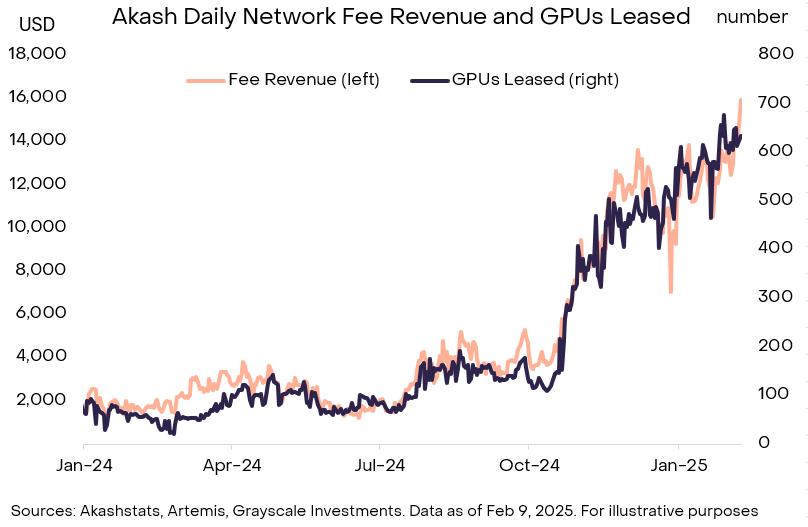
| Akash Network | General decentralized cloud | CPU & GPU (NVIDIA T4/A100) | AKT staking + compute payments |
| Gensyn | Decentralized verification | High-end NVIDIA GPUs | Token incentives for verified proofs |
| Vast.ai | Marketplace for renting | User-defined (NVIDIA dominant) | USD payments to hosts |
Render Network remains the leader in GPU-intensive creative workloads, particularly for rendering and increasingly for AI inference. Its established client base provides steady demand, though it often requires higher-end professional hardware for the most lucrative jobs. io.net focuses heavily on aggregating consumer-grade GPUs, making it accessible for individual owners of RTX 40-series cards who want to earn passive income through AI training tasks.
Akash Network offers a broader cloud infrastructure approach, competing directly with centralized providers like AWS. It supports a wider variety of hardware, including older enterprise GPUs, but may have a steeper learning curve for users unfamiliar with Kubernetes-based deployments. Gensyn introduces a novel verification layer, ensuring that compute results are accurate before payment is released, which is critical for high-stakes AI research.
For those looking to monetize specific hardware, Vast.ai operates more as a peer-to-peer marketplace than a consensus-driven blockchain network. Hosts set their own prices for RTX 3090s, 4090s, and enterprise cards, paying only platform fees. This model offers transparency and immediate USD payouts, though it lacks the token appreciation potential of other DePIN projects.
Choosing the right network depends on your hardware and goals. If you own high-end consumer GPUs and want to participate in the AI boom, io.net or Vast.ai offer the lowest barriers to entry. For professional studios or those with enterprise-grade hardware, Render and Akash provide more robust, long-term infrastructure options. Always verify current hardware compatibility and reward rates, as these networks evolve rapidly with new GPU releases and AI model requirements.
Inspect the expensive parts
Before committing capital or hardware to a decentralized compute network, you need a practical checklist. The GPU market in 2026 is profitable but fragile; a single misconfiguration can turn your hardware into a liability. This section walks through the critical inspection points to ensure your DePIN investment remains profitable.
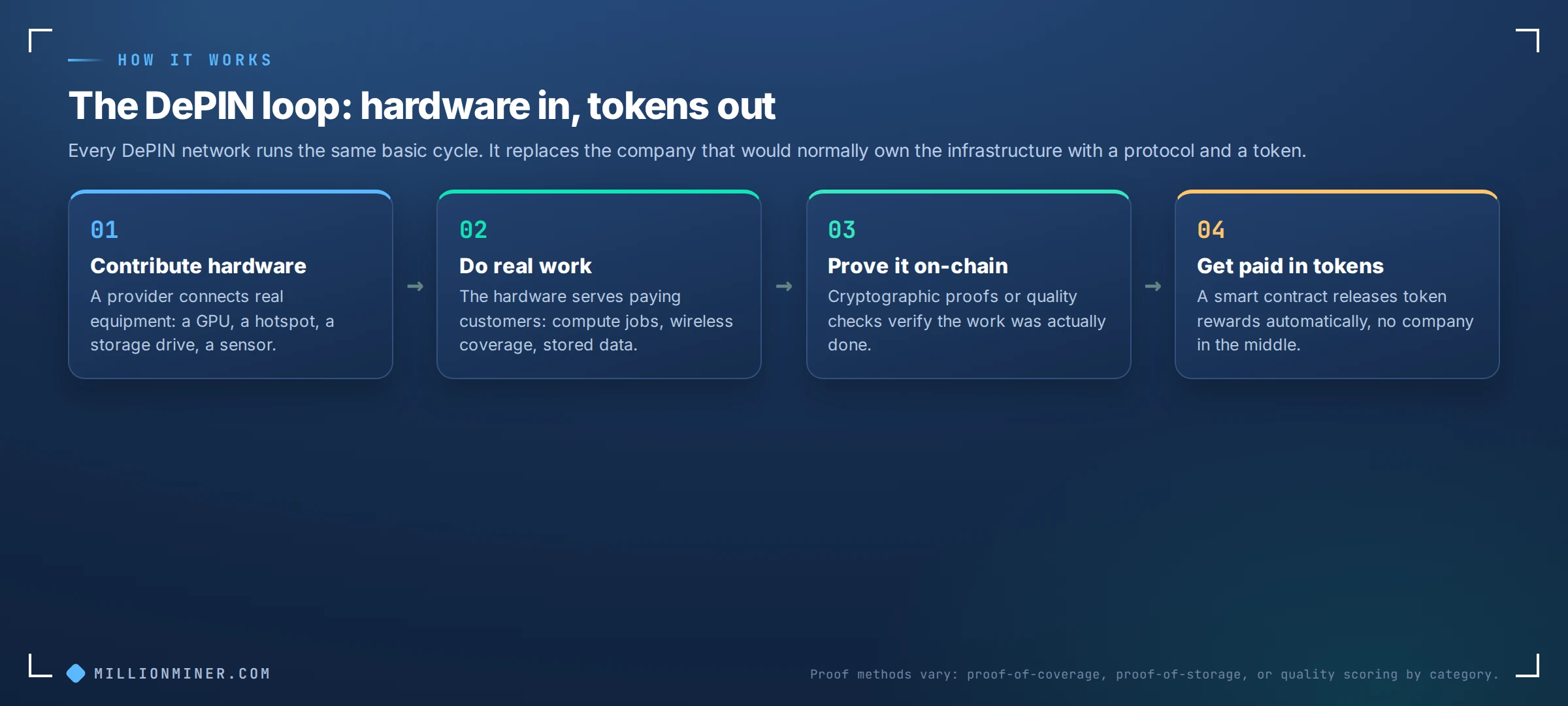
Most failures stem from invalid proof-of-service (PoS) data. If the network cannot verify your GPU actually completed the AI training task, you earn nothing. Check if the protocol uses zero-knowledge proofs or verifiable compute signatures. Without this integrity layer, you risk being flagged for downtime or invalid work, wiping out your daily earnings.
Decentralized AI training often requires low-latency connections to the main node. If your internet connection is unstable or your ISP throttles traffic, your node will fall behind. Measure your ping to the network’s primary servers. High latency doesn’t just slow you down; it can cause your node to be slashed or removed from the active worker pool entirely.
Not all GPUs are equal in the DePIN space. NVIDIA’s RTX 4090 is a common standard, earning between $3.00 and $7.00 per day, but older cards may not meet the VRAM thresholds for modern AI models. Verify that your specific GPU model is whitelisted by the protocol. Incompatible hardware leads to failed jobs and wasted electricity with zero payout.
Profitability hinges on the spread between your daily earnings and your power bill. If your electricity rate exceeds $0.10 per kWh, many DePIN projects become unprofitable. Use a calculator to subtract your hourly power cost from your estimated hourly earnings. Always factor in peak usage times where grid rates might spike, eating into your margins.
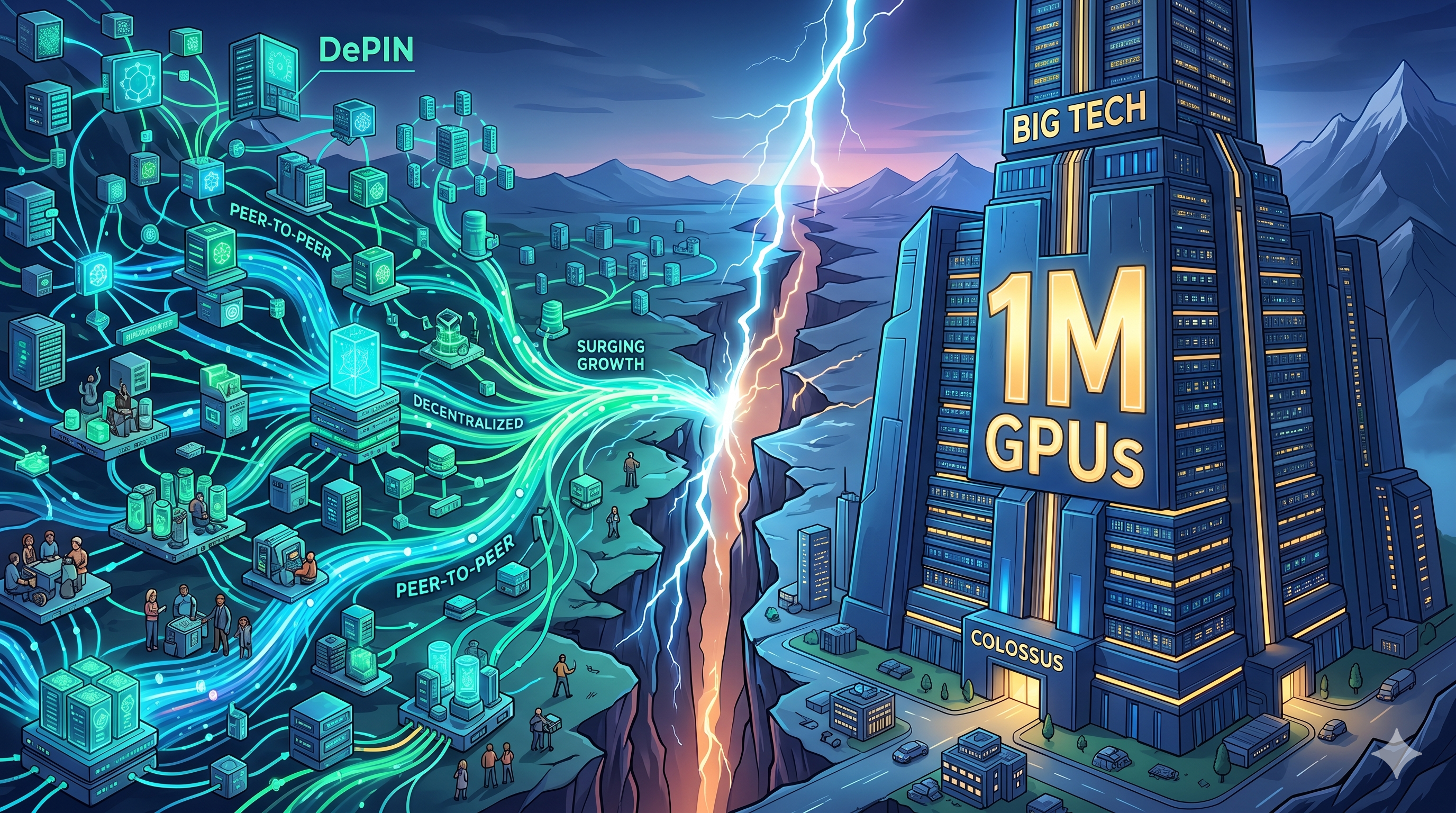
High daily rewards mean little if the token crashes or is locked for years. Look at the token’s vesting schedule for early investors and the team. If a large portion of the supply is about to unlock, the price could drop, reducing your actual USD earnings. Choose protocols with transparent, long-term token emission plans to protect your returns.
By following this inspection checklist, you can avoid the most common pitfalls in the GPU market DePIN sector. Focus on integrity, compatibility, and cost rather than just headline rewards.
Plan for ownership costs
A cheap GPU buy often hides expensive operational realities. When you join a decentralized compute network, the hardware is only the first line item. The true cost of ownership includes electricity, cooling, and the risk of hardware degradation under continuous 100% utilization.
Electricity is the silent profit-killer. Even with a high-end NVIDIA RTX 4090, daily earnings typically range between $3.00 and $7.00 depending on the network and current demand [src-serp-2]. If your local electricity rate exceeds $0.15 per kWh, those earnings may barely cover power costs, turning a profitable asset into a liability. Always calculate your net profit after subtracting power draw, not just the purchase price.
Maintenance surprises are equally important. GPUs in DePIN networks run at maximum load for months. This accelerates wear on thermal pads and fans. A $50 thermal paste replacement or a $150 fan swap every two years is a normal maintenance cost, not an anomaly. Networks often require you to handle these repairs yourself, meaning downtime equals lost income.
When a cheap buy stops being cheap is usually when reliability drops. Older cards or budget models may fail under sustained AI training loads. If a card fails mid-contract, you lose both the repair cost and the potential earnings for that period. Calculate the total cost of ownership over three years, including power and repairs, before committing.


As an Amazon Associate, we may earn from qualifying purchases.
Gpu depin 2026: what to check next
Decentralized physical infrastructure networks (DePIN) promise to lower AI training costs by aggregating idle GPU power, but the reality is more nuanced than the marketing suggests. Before committing hardware or capital, it helps to understand the actual tradeoffs between reliability, earnings, and technical complexity.
No comments yet. Be the first to share your thoughts!