
Get DePIN GPU Mining Right
Before connecting your hardware to a decentralized network, you need to verify that your setup matches the specific technical requirements of the DePIN protocol. Unlike traditional crypto mining, DePIN nodes often require specific driver versions, Docker compatibility, or dedicated storage configurations to earn rewards.
Start by checking your GPU compatibility. Most high-performance DePIN projects in 2026 rely on NVIDIA hardware due to CUDA support. An RTX 4090 can generate between $3.00 and $7.00 daily, but lower-end cards may not meet the compute thresholds for profitable tasks. Ensure your drivers are up to date and that your system meets the minimum RAM and storage specs listed in the project’s documentation.
Next, evaluate your internet connection. Stable, low-latency bandwidth is critical for data-heavy DePIN tasks like rendering or AI inference. A wired Ethernet connection is strongly preferred over Wi-Fi to prevent packet loss, which can disqualify your node from earning rewards. Finally, review the network’s consensus mechanism and tokenomics to understand how payouts are distributed and what uptime requirements are enforced.
Work through the steps
DePIN GPU Mining works best as a clear sequence: define the constraint, compare the realistic options, test the tradeoff, and choose the path with the fewest hidden costs. That order keeps the advice usable instead of decorative. After each step, pause long enough to check whether the recommendation still fits the reader's actual situation. If it depends on perfect timing, unusual access, or a best-case budget, include a simpler fallback.

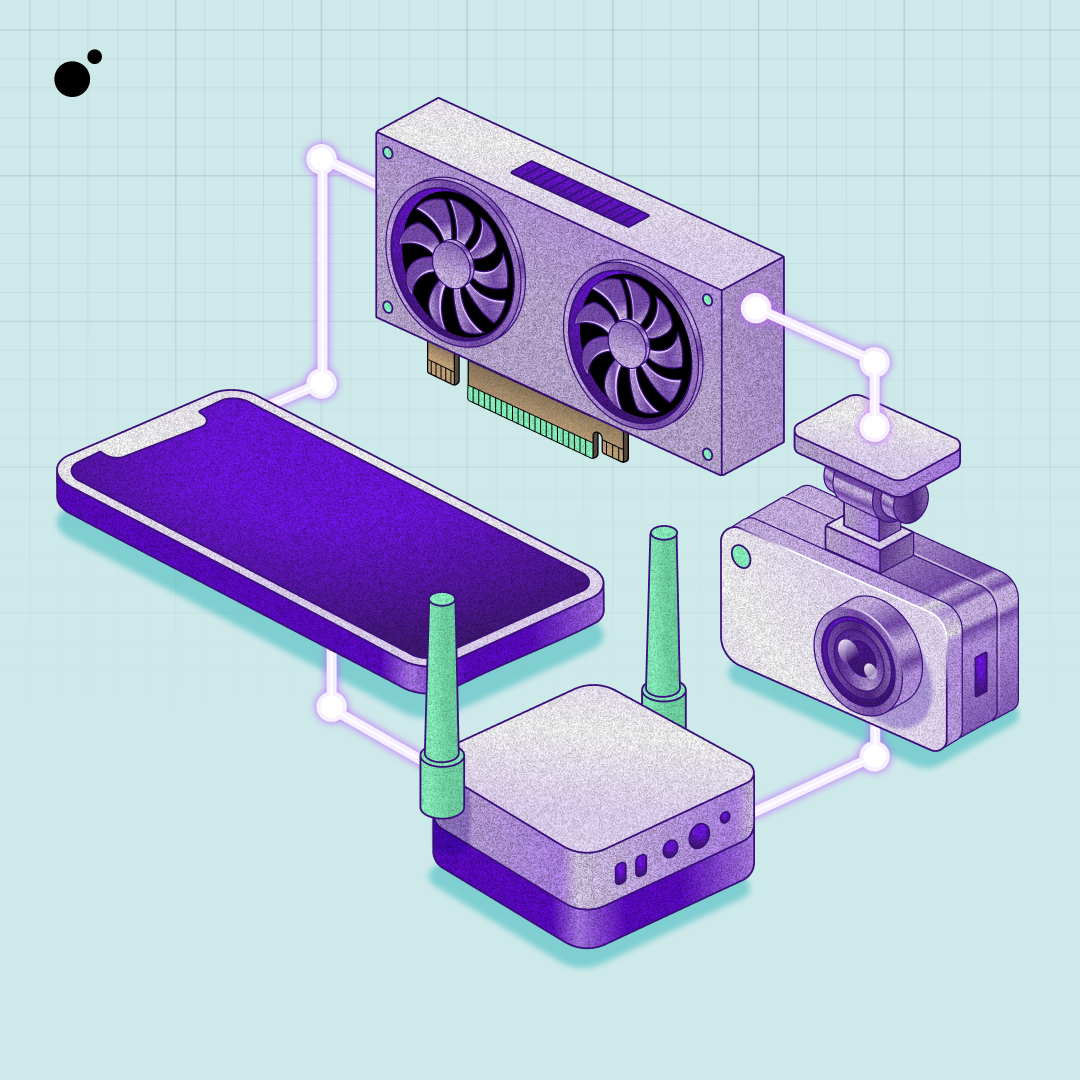

Fix Common Mistakes That Kill DePIN GPU ROI
Most operators don’t lose money because the technology is flawed; they lose it because they ignore the physical constraints of their hardware. In 2026, DePIN networks are competitive, and small configuration errors compound quickly into significant daily losses. Avoid these four pitfalls to protect your margins.
Ignoring Thermal Throttling
DePIN tasks often require sustained, 100% GPU utilization for hours. If your card hits its thermal limit (usually 83–85°C), it will throttle performance, dropping your hash rate and earning potential by 30% or more.
Set your power limit to 70–80% and adjust fan curves to keep junction temperatures below 95°C. This isn’t about saving the card; it’s about maintaining consistent output. A cooler card runs faster and longer.
Overlooking Network Latency
Unlike traditional mining, many DePIN protocols penalize high latency. If your ping to the nearest edge node is high, you’ll miss challenges or get assigned lower-value tasks.
Use a wired Ethernet connection. Wi-Fi introduces jitter that can disqualify you from high-paying workloads. Check your connection stability before deploying; a stable 50ms ping is better than a fluctuating 20ms.
Mismatching GPU Architecture
Not all GPUs are equal in DePIN. Newer architectures (NVIDIA Ada Lovelace or AMD RDNA 3) handle specific AI inference tasks more efficiently than older cards. Using a legacy GPU for a modern AI training task is like using a bicycle to haul freight.
Verify the protocol’s supported hardware list. If the network prioritizes tensor cores or specific memory bandwidth, an older GPU will earn pennies compared to a newer model. Don’t force hardware that isn’t optimized for the task.
Neglecting Electricity Costs
Profitability is revenue minus electricity. If you’re mining in a region with high power costs, your margins vanish quickly. A GPU drawing 300W at $0.20/kWh eats $1.44 daily in power alone.
Calculate your break-even point before joining. If your estimated daily earnings are less than 1.5x your power cost, the risk isn’t worth the reward. Stick to low-cost energy zones or high-yield networks to stay profitable.
DePIN GPU mining 2026: common questions answered
Before committing hardware to decentralized compute, verify the economics and technical requirements. The landscape has shifted from simple coin mining to providing verified inference and rendering tasks.
Understanding these distinctions prevents wasted investment on obsolete mining strategies. Focus on networks that utilize your GPU for real-world compute tasks rather than cryptographic hashes.
No comments yet. Be the first to share your thoughts!