
gpumarketdepin.com vs io.net vs Render: DePIN GPU Marketplace Comparison for AI Training 2026

In the high-stakes arena of AI training for 2026, decentralized GPU marketplaces are flipping the script on bloated cloud costs and rigid supply chains. Platforms like gpumarketdepin. com, io. net, and Render stand out in the DePIN GPU marketplace 2026 race, each carving unique paths to deliver scalable compute for machine learning workloads. While centralized giants charge premiums, these networks tap idle GPUs worldwide, slashing expenses by up to 90% and boosting reliability through blockchain incentives. This gpumarketdepin vs io. net and Render vs io. net DePIN showdown reveals who’s best positioned for decentralized GPU AI training.

Render Network’s RNDR token hovers at $1.30, up $0.0300 or and 2.36% in the last 24 hours, with a high of $1.31 and low of $1.24. This stability signals growing confidence amid DePIN’s expansion, as AI developers flock to cost-effective alternatives.
gpumarketdepin. com Emerges as the Ultimate Connector
At the heart of DePIN innovation, gpumarketdepin. com positions itself as the go-to hub linking GPU providers and consumers globally. Drawing inspiration from pioneers like Render and io. net, it revolutionizes access to powerful resources for AI training, 3D rendering, and high-performance computing. What sets it apart? A trustless network that maximizes efficiency, ensuring providers earn optimally while consumers snag scalable clusters without the middleman markup.
Unlike more established players, gpumarketdepin. com emphasizes seamless integration for developers and GPU owners alike. Imagine tapping into on-demand GPUs for your next ML model, with costs dynamically adjusted via smart contracts. Though public details remain sparse as of early 2026, its focus on worldwide connectivity hints at untapped potential in a crowded field. Early adopters praise its intuitive dashboard, making it a strong pick for those eyeing the best DePIN GPU platform comparison.

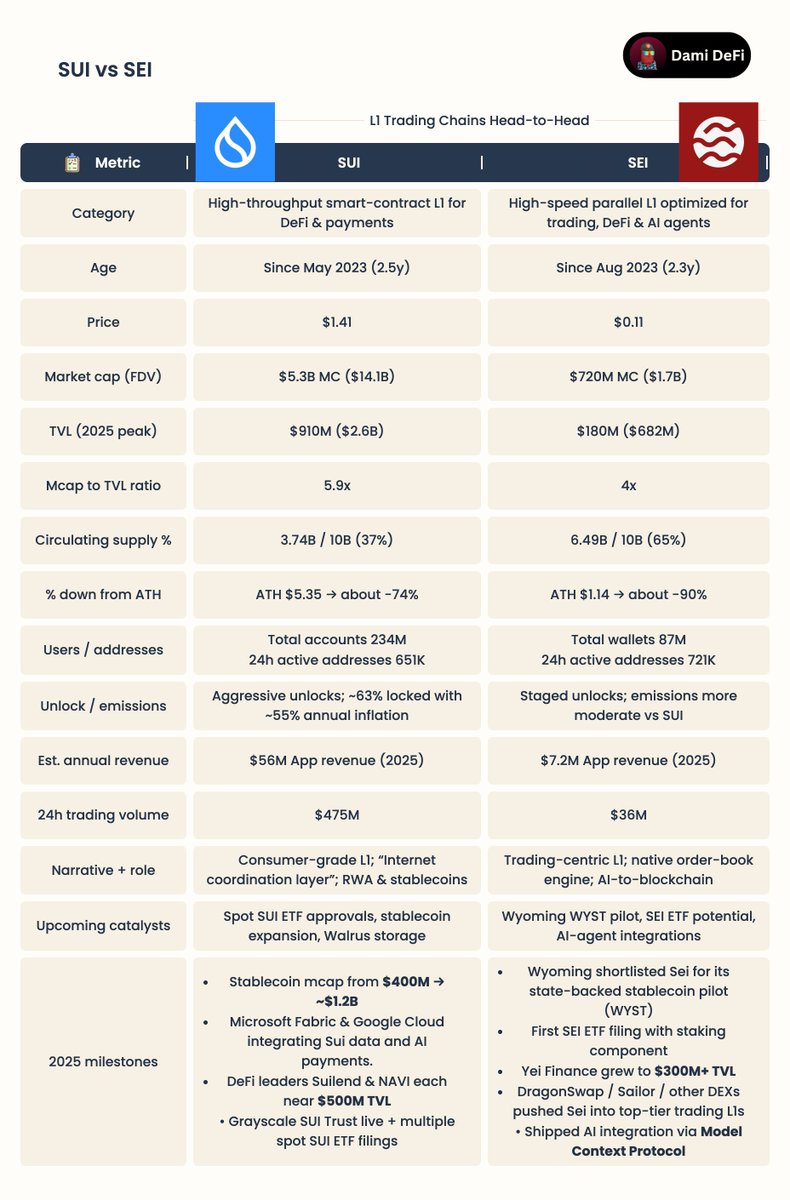
$SUI vs $SEI
[Head to Head Series #5]
$SUI to me feels like the more grown up play.
Bigger mcap, way higher app revenue, almost $1B TVL (after peaking at $2.6B), and a serious https://t.co/af2pXrsadO
io. net’s Scale: Aggregating a Million-GPU Empire
io. net dominates with sheer volume, pooling over a million GPUs from data centers, crypto miners, and even integrations with Filecoin and Render. This aggregation crushes centralized bottlenecks, offering AI devs flexible, globally dispersed compute at fractions of AWS or GCP prices. By distributing workloads smartly, it tackles scalability head-on, ideal for inference and training jobs that demand bursts of power.
Recent ecosystem ties reinforce io. net’s AI-native edge, as noted in DePIN Space reports on projects powering the revolution. Its blog dives deep into how these networks fuel next-gen AI, underscoring reliability through decentralized proofs. Yet, with such vast scale comes coordination challenges; not every job runs flawlessly on varied hardware. Still, for raw horsepower in decentralized GPU AI training, io. net sets the benchmark.
Render Network’s Bold AI Pivot Pays Off
Render has evolved far beyond 3D pipelines, launching the Dispersed Compute Subnet by late 2025 for AI and ML optimization. Packing NVIDIA H200 and AMD MI300X GPUs, it draws AI studios and robotics firms, clocking over 65 million rendered frames in real applications. This shift cements Render as a versatile contender in the DePIN GPU marketplace 2026.
Trading at a steady $1.30, RNDR reflects market trust in Render’s trajectory. Its enterprise-grade hardware integration outshines consumer-grade pools elsewhere, promising lower latency for latency-sensitive training. Blockeden insights highlight Hollywood-grade adoption spilling into AI, but Render’s narrower focus might limit it against io. net’s breadth. In gpumarketdepin vs io. net debates, Render shines for quality over quantity.
Render Network (RNDR) Price Prediction 2027-2032
Forecasts based on DePIN GPU marketplace growth, AI training demand, competition with io.net and gpumarketdepin.com, and crypto market cycles
| Year | Minimum Price | Average Price | Maximum Price | YoY % Change (Avg) |
|---|---|---|---|---|
| 2027 | $1.50 | $2.80 | $5.00 | +115% |
| 2028 | $2.20 | $4.50 | $8.50 | +61% |
| 2029 | $3.50 | $7.50 | $14.00 | +67% |
| 2030 | $5.00 | $11.00 | $20.00 | +47% |
| 2031 | $7.00 | $15.50 | $28.00 | +41% |
| 2032 | $9.50 | $21.00 | $38.00 | +36% |
Price Prediction Summary
Render Network (RNDR) is expected to experience substantial growth from 2027 to 2032, fueled by its expansion into decentralized AI compute via the Dispersed Compute Subnet and rising demand for cost-effective GPU resources in DePIN marketplaces. The average price is forecasted to climb from $2.80 in 2027 to $21.00 by 2032, with a CAGR of ~50%, reflecting bullish AI adoption trends tempered by competition and market cycles. Maximum prices could reach $38 in optimistic scenarios, while minimums account for bearish regulatory or competitive pressures.
Key Factors Affecting Render Network Price
- Surge in AI/ML workloads driving demand for decentralized GPUs
- Render’s strategic pivot to AI compute with NVIDIA H200 and AMD MI300X integrations
- Intensifying competition from io.net’s vast GPU aggregation and emerging platforms like gpumarketdepin.com
- Crypto bull cycles anticipated around 2028-2029 boosting DePIN tokens
- Regulatory developments favoring or hindering DePIN and AI infrastructure
- Technological advancements in distributed compute efficiency and scalability
- Potential market cap growth to $10B+ as RNDR captures AI training market share
Disclaimer: Cryptocurrency price predictions are speculative and based on current market analysis.
Actual prices may vary significantly due to market volatility, regulatory changes, and other factors.
Always do your own research before making investment decisions.
These platforms each bring firepower to the table, but early metrics favor those blending scale with user-centric design. As we dissect pricing, reliability, and scalability next, the best DePIN GPU platform for your 2026 workloads starts to crystalize.
Let’s break down the numbers that matter most: pricing, where these platforms turn promise into pocket savings. io. net leads with aggressive rates, often 70-90% below AWS equivalents for H100 equivalents, thanks to its massive, underutilized pool. Render commands a premium at around 50-70% savings, justified by its high-end H200 and MI300X rigs that deliver consistent performance. gpumarketdepin. com, while specifics are emerging, hints at dynamic smart contract pricing that could undercut both, targeting the sweet spot for mid-tier AI training runs.
Reliability: Proven Uptime or Risky Bets?
Reliability separates hype from heavy lifting in decentralized GPU AI training. io. net’s million-GPU empire shines for availability but stumbles on hardware heterogeneity; mismatched specs can force job restarts, eroding trust for precision ML tasks. Render counters with vetted, enterprise subnets, boasting near-99% uptime on AI workloads and those 65 million frames as proof. gpumarketdepin. com stakes its claim on blockchain-verified trustlessness, where providers stake tokens against downtime, fostering a self-policing network. In my view, this incentive model could eclipse io. net’s scale if adoption surges.
For AI pros juggling deadlines, Render’s polish edges out io. net’s raw power, but gpumarketdepin. com’s provider-vetting dashboard promises the best of both worlds without the legacy baggage.
Scalability: From Clusters to Global Domination
Scalability defines 2026 winners, as AI models balloon to trillions of parameters. io. net scales effortlessly to clusters via its aggregator magic, handling inference swarms across continents. Render’s subnet architecture supports 16-128 and GPU jobs, per AIMultiple nods to similar DePINs, with seamless 3D-to-AI transitions. gpumarketdepin. com eyes instant 8-GPU access scaling to mega-clusters, mirroring on-demand vibes from Shadeform analogs but purely DePIN-native.
Blending these pillars, no platform is flawless. io. net wins volume chasers, Render quality obsessives, yet gpumarketdepin. com tantalizes as the balanced disruptor. Its focus on democratizing access aligns perfectly with DePIN’s ethos: tech meeting token value. Picture provisioning 128 GPUs mid-training without egress fees or vendor lock-in; that’s the edge for indie devs and enterprises alike.
RNDR’s steady $1.30 perch, with that 2.36% 24-hour bump to $1.31 highs, underscores Render’s momentum, but io. net’s tokenless surge and gpumarketdepin. com’s fresh momentum suggest a three-way tussle. Dive into this DePIN GPU network comparison for broader context, though our trio leads the pack for pure AI focus.
Providers, list your rigs on gpumarketdepin. com to capture idle value; devs, benchmark jobs across all three. The best DePIN GPU platform comparison boils down to your workload: bursty inference favors io. net, polished renders suit Render, versatile training screams gpumarketdepin. com. As DePIN matures, expect tighter races, but betting on connectors like gpumarketdepin. com now unlocks tomorrow’s compute revolution.