
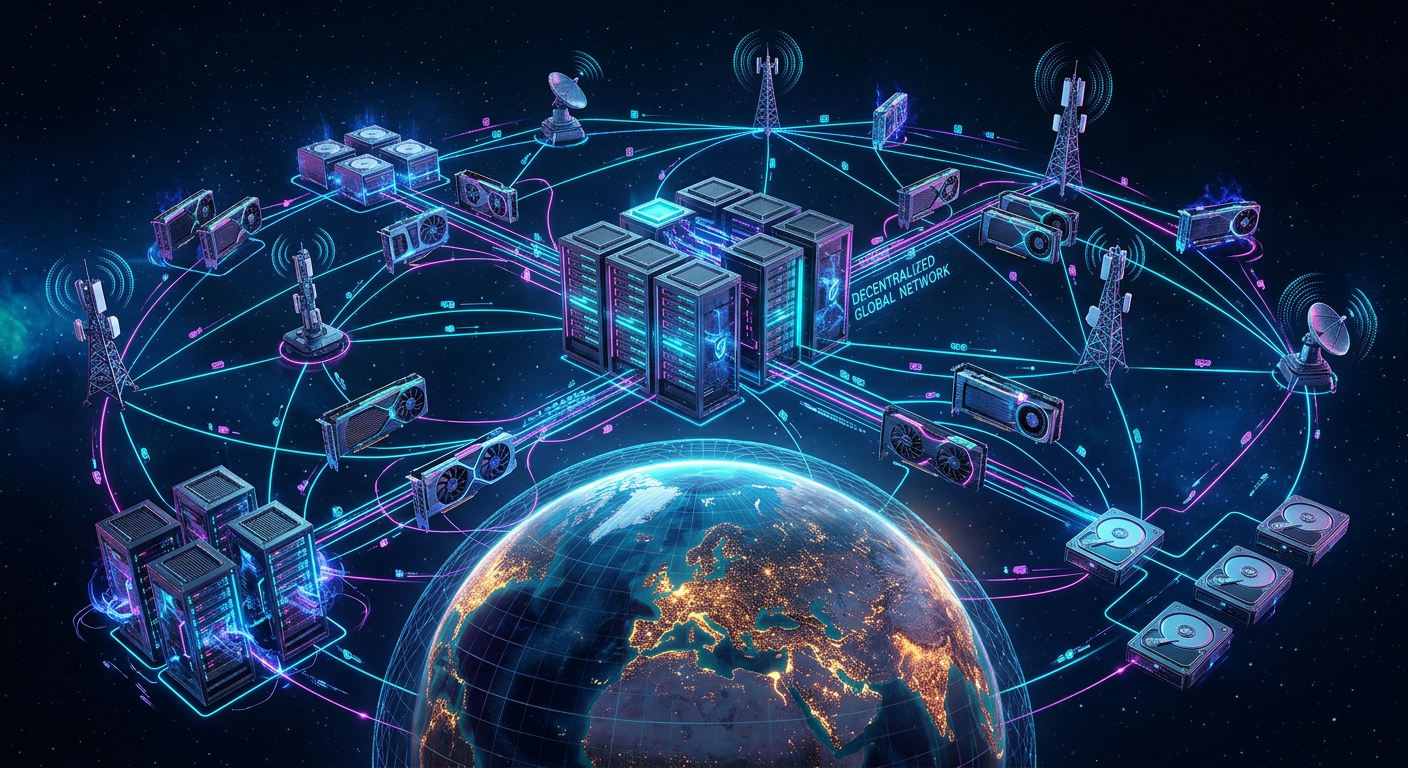
The 2026 GPU DePIN landscape
By 2026, the decentralized physical infrastructure (DePIN) sector has evolved from experimental network testbeds into a critical layer of the global compute economy. The market is no longer defined by speculative token emissions alone but by the tangible coordination of real-world resources—primarily GPU compute power, wireless bandwidth, and storage. Render Network and Akash Network have emerged as the dominant architects of this shift, challenging the monopoly of centralized cloud providers by offering open, permissionless access to high-performance hardware.
Render Network operates as the specialized engine for visual workloads. As the world’s first decentralized GPU rendering platform, it aggregates idle GPUs to create a global pool capable of handling intensive graphics rendering, AI training, and machine learning tasks. Its value proposition rests on vertical integration: it serves specific, high-demand use cases where latency and throughput are paramount, effectively acting as a decentralized alternative to services like AWS or Google Cloud for creative and AI industries.
Akash Network, conversely, positions itself as the decentralized cloud for general-purpose computing. It functions as a marketplace where providers can list unused compute capacity and users can bid for it, often at a fraction of the cost of traditional cloud infrastructure. While Render focuses on the specific needs of rendering and AI inference, Akash’s broader scope allows it to host a wider variety of applications, from web hosting to complex data processing pipelines. This distinction creates a bifurcated landscape: Render dominates specialized high-compute tasks, while Akash captures the broader market for cost-efficient, flexible cloud resources.
The competition between these two giants is reshaping the GPU DePIN market. Render’s token (RENDER) and Akash’s token (AKT) reflect different market dynamics, driven by their respective adoption curves and utility demands. Understanding their divergence is essential for investors and developers navigating the 2026 infrastructure race.
Render Network vs Akash: Core differences
Render Network and Akash Network represent two distinct approaches to decentralized physical infrastructure (DePIN). While both leverage idle GPU power, their target audiences and technical architectures diverge significantly. Render specializes in high-bandwidth, media-heavy workloads like 3D rendering and video transcoding. Akash operates as a general-purpose cloud marketplace, prioritizing cost efficiency for AI training, inference, and broad compute tasks.
Render Network: The Media Specialist
Render functions as a distributed cloud for graphics. It connects GPU providers with studios and creators needing high-performance rendering capabilities. The network is optimized for bandwidth-intensive tasks, ensuring smooth data transfer for large media files. Its primary use case remains media production, though it has expanded into AI inference for specific media applications. The RENDER token is the native asset, used for payments and staking within the ecosystem.
Akash Network: The General-Purpose Marketplace
Akash positions itself as a decentralized alternative to traditional cloud providers like AWS or Azure. It offers a flexible, open-source marketplace for CPU, GPU, and storage resources. Akash’s architecture supports a wide range of workloads, including large-scale AI model training, machine learning inference, and web hosting. By using a bid-ask auction model, Akash often provides lower costs than centralized competitors. The AKT token facilitates governance and transaction fees on the network.
Head-to-Head Comparison
The following table outlines the structural and operational differences between the two networks. Render’s focus on media creates a specialized but narrower market. Akash’s versatility appeals to a broader range of developers and enterprises seeking scalable compute.
| Feature | Render Network | Akash Network |
|---|---|---|
| Primary Focus | Media rendering & AI inference | General-purpose cloud compute |
| Target Users | Studios, creators, AI devs | Developers, enterprises, AI labs |
| Pricing Model | Fixed bandwidth/compute rates | Bid-ask auction marketplace |
| Native Token | RENDER | AKT |
| Key Strength | High-bandwidth media optimization | Cost efficiency & flexibility |
| Deployment Ease | Specialized SDKs | Standard Kubernetes containers |
Market Performance
Both tokens exhibit volatility typical of the DePIN sector. Investors often track RENDER’s price action closely due to its direct tie to media industry demand. Akash’s AKT token reflects broader cloud computing trends and AI adoption rates. Live market data provides real-time insight into investor sentiment for each project.
Passive income potential for GPU owners
The economic reality for node operators in the GPU DePIN sector is defined by hardware quality and network demand. For owners of high-end consumer hardware, such as the NVIDIA RTX 4090, daily earnings typically range between $3.00 and $7.00 on active networks like Akash or Render [src-serp-3]. This income is not guaranteed; it fluctuates based on the current utilization rates of the specific network and the competitive pricing set by other providers.
Enterprise adoption remains the primary barrier to consistent revenue. While DePIN promises cheaper AI compute, large-scale clients face significant hurdles regarding reliability, service level agreements (SLAs), and procurement compliance [src-serp-4]. Consequently, most node operators rely on spot-market demand rather than long-term enterprise contracts, leading to volatile income streams.
Participation requires careful calculation of operational costs. Electricity consumption, cooling infrastructure, and hardware depreciation must be subtracted from gross earnings to determine net profitability. A node that appears profitable on paper may operate at a loss if energy costs exceed the marginal revenue from compute tasks.
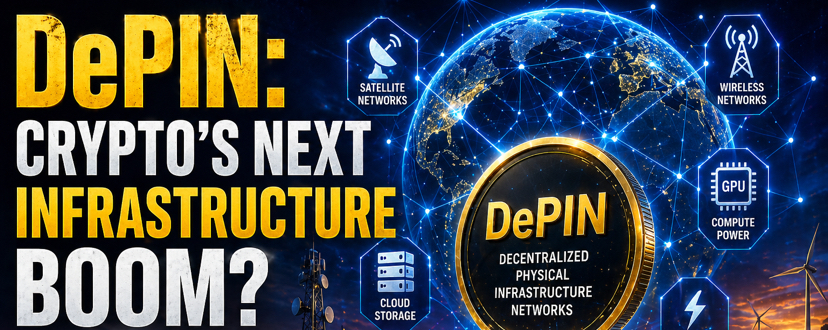
Before deploying hardware, operators should model their break-even point using current electricity rates and projected token valuations. The barrier to entry is low, but the barrier to sustained profitability is high.
Enterprise Adoption and Reliability Hurdles
DePIN networks promise cheaper AI compute by aggregating idle GPUs, but enterprise adoption remains constrained by reliability gaps and procurement friction. While decentralized models reduce upfront hardware costs, they introduce variance in uptime and latency that traditional cloud providers mitigate through massive scale and redundant infrastructure.
The core barrier is the Service Level Agreement (SLA). Enterprises require guaranteed availability, data sovereignty, and predictable performance for critical AI workloads. Most DePIN networks operate on best-effort models, where node reliability fluctuates based on individual operator incentives. This variance creates a risk profile that CIOs and procurement teams are hesitant to accept without significant mitigation strategies.
| Feature | Traditional Cloud (AWS/Azure) | DePIN (Render/Akash) |
|---|---|---|
| SLA Guarantee | 99.9% - 99.99% uptime | Best-effort / Variable |
| Procurement | Standard enterprise contracts | Crypto-native / Token-based |
| Data Sovereignty | Strict regional compliance | Decentralized / Harder to audit |
| Cost Structure | Premium for reliability | Discounted for risk tolerance |
Render and Akash are addressing these hurdles through different mechanisms. Render focuses on high-fidelity rendering workloads with stricter node vetting, while Akash offers a more open marketplace with competitive pricing but higher operational complexity. The choice depends on whether the enterprise prioritizes guaranteed stability or cost optimization for non-critical AI tasks.
To bridge the trust gap, DePIN providers are implementing staking mechanisms and reputation systems. Nodes must stake tokens to participate, creating financial disincentives for downtime or poor performance. However, these mechanisms are still maturing and lack the legal enforceability of traditional cloud contracts.
Technical Performance Comparison
The following chart illustrates the performance variance in decentralized compute networks compared to centralized alternatives. While DePIN offers cost advantages, the reliability trade-off remains a significant factor for enterprise decision-makers.
The gap between decentralized promises and enterprise needs is narrowing, but it is not yet closed. Until SLAs become standardized and legally binding, DePIN will likely remain a supplementary resource for non-critical AI workloads rather than a primary infrastructure provider.
No comments yet. Be the first to share your thoughts!