
Choosing the Right GPU for DePIN
The hardware you bring to a DePIN network dictates your daily earnings and long-term viability. Unlike traditional crypto mining, which often prioritizes raw hash rate above all else, DePIN rewards uptime, stability, and low power consumption. The best GPUs for this work are not always the most expensive; they are the ones that can run 24/7 without throttling or failing.
When selecting a card, look beyond the initial purchase price. Consider the total cost of ownership, including electricity and potential repairs. An older, efficient card might outperform a newer, power-hungry flagship in a home deployment. Check current market listings for used or refurbished units, but verify their health before buying.
Focus on models with strong community support and proven reliability in decentralized compute roles. Cards like the NVIDIA RTX 3060 or 4070 series often strike a good balance between cost and performance for most DePIN tasks. Avoid cards with known cooling issues or those that require excessive voltage tweaking to stay stable.


As an Amazon Associate, we may earn from qualifying purchases.
Shortlist real options
Use this section to make the DePIN GPU Mining decision easier to compare in real life, not just on paper. Start with the reader's actual constraint, then separate must-have requirements from details that are merely nice to have. A practical choice should survive normal use, maintenance, timing, and budget. If a recommendation only works in an ideal situation, call that out plainly and give the reader a fallback path.
| Factor | What to check | Why it matters |
|---|---|---|
| Fit | Match the option to the primary use case. | A good deal still fails if it does not fit the job. |
| Condition | Verify age, wear, and service history. | Hidden condition issues erase upfront savings. |
| Cost | Compare purchase price with likely upkeep. | The cheapest option is not always the lowest-cost option. |
Inspect the expensive parts
Before committing to DePIN GPU mining, check the hardware and network conditions that cause the most expensive failures. A single bottleneck can turn a profitable setup into a loss maker.
As an Amazon Associate, we may earn from qualifying purchases.
A simple checklist prevents costly downtime. Focus on these areas to ensure your DePIN GPU mining setup runs smoothly and profitably.
Plan for ownership costs
A GPU’s purchase price is just the entry fee. In Decentralized Physical Infrastructure Networks (DePIN), the real expenses accumulate in the background: electricity, cooling, hardware wear, and the occasional replacement part. A cheap buy stops being cheap the moment your monthly power bill exceeds your daily earnings.
Electricity and cooling
DePIN nodes run 24/7, making energy the primary variable cost. While centralized cloud providers absorb infrastructure overhead, you pay for every kilowatt-hour. High-end GPUs like the RTX 4090 can draw 450W under load. At $0.15 per kWh, a single card costs roughly $160 monthly just for power. If your DePIN network pays less than that, you are losing money.
Cooling is equally critical. Mining rigs generate significant heat, often requiring dedicated exhaust fans or liquid cooling solutions. These accessories add to your upfront costs and ongoing energy draw. Poor airflow leads to thermal throttling, which reduces hash rates and shortens the lifespan of your GPU.
Hardware depreciation and maintenance
GPUs are not built for continuous 100% utilization. Running them at max load accelerates wear on fans, thermal pads, and the silicon itself. You may need to repaste thermal compounds or replace fans within 12–18 months. This maintenance is a hidden cost that rarely appears in ROI calculators.
Additionally, DePIN protocols evolve rapidly. A GPU that is profitable today may become obsolete tomorrow if the network shifts to a more efficient consensus mechanism or requires higher VRAM. This depreciation risk means your hardware’s useful life is shorter than in traditional gaming or content creation setups.
When to reconsider
Before committing, calculate your break-even point. Include your electricity rate, cooling costs, and estimated hardware replacement frequency. If your projected monthly profit is less than $50, the hassle may not be worth it. Consider starting with a single GPU to test network stability and earnings before scaling up to a multi-card rig.


As an Amazon Associate, we may earn from qualifying purchases.
DePIN GPU Mining FAQ
Here are the most common questions about decentralized GPU mining and DePIN networks.
Is GPU mining dead in 2026?
Traditional crypto mining is largely dead for consumer GPUs, but DePIN has revived the hardware. Instead of solving proof-of-work puzzles, your GPU now earns by renting compute power to AI developers. This shift means your hardware still has value, but the revenue model is based on real-world utility rather than speculative block rewards.
What is DePIN in cryptocurrency?
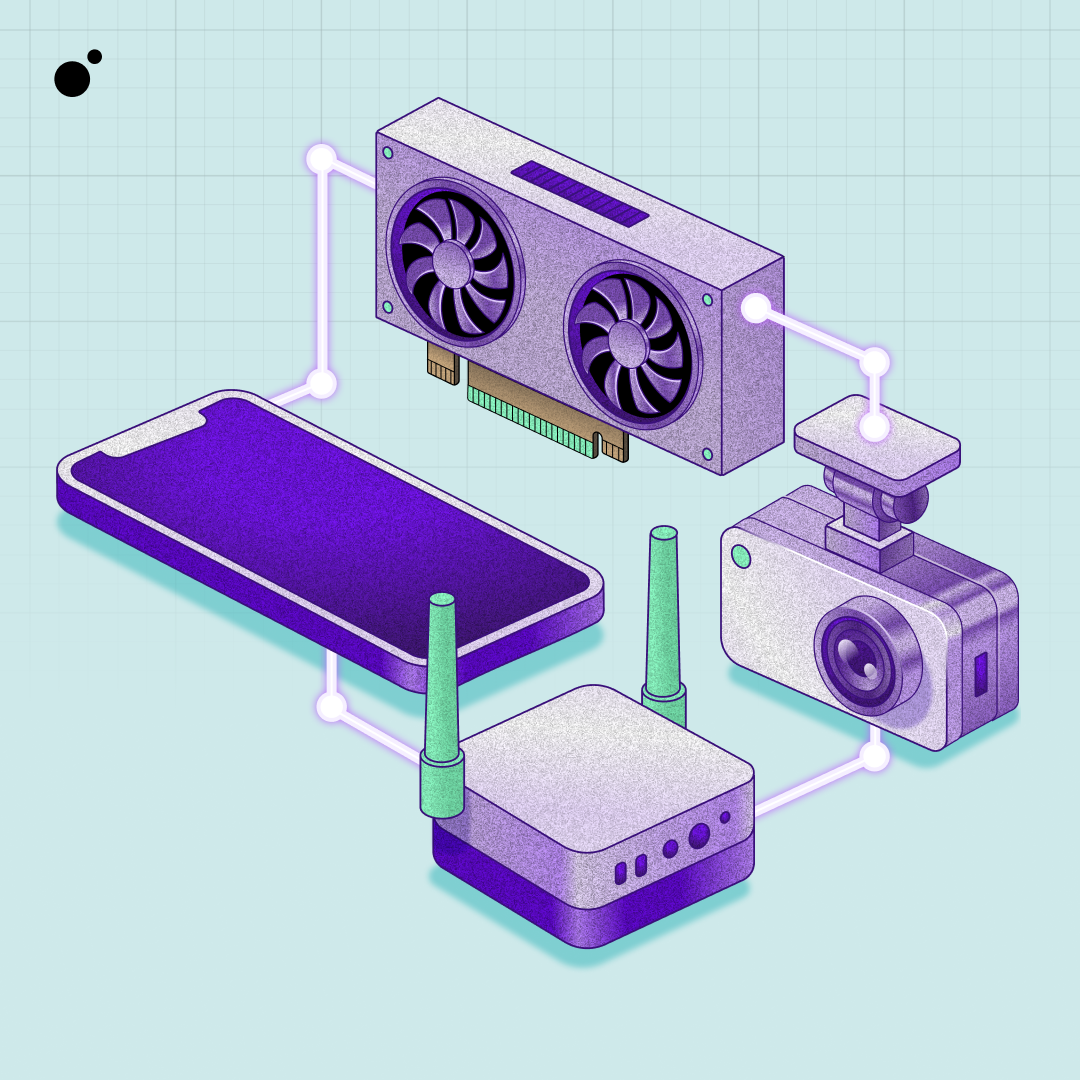
DePIN stands for Decentralized Physical Infrastructure Networks. It is a system where individuals contribute physical hardware—like GPUs, storage, or wireless hotspots—to a decentralized network. In return, they earn tokens. For GPU mining, this means you are essentially renting out your graphics card’s processing power to AI companies that need cheap, scalable compute resources.
How can I make money with my GPU?
You can earn revenue by joining networks like io.net, Render, or Clore.ai. You install their agent software, which connects your GPU to the network. You get paid in the network’s native token or stablecoins based on how much compute time you provide. While not as profitable as the 2021 bull run, it offers a passive income stream for hardware that might otherwise sit idle.
Is there going to be a GPU shortage in 2026?
A severe shortage is unlikely because global semiconductor production remains steady. However, high-end consumer GPUs like the RTX 4090 remain in demand for DePIN due to their high compute density. If AI training demand spikes, these specific cards may see higher resale prices, but general availability for mid-range cards should remain stable.
No comments yet. Be the first to share your thoughts!