

As NVIDIA Corp stock hovers at $189.82, up $1.82 or 0.9690% in the last 24 hours, GPU owners face a golden window in 2026. Idle NVIDIA RTX cards, from the powerhouse 4090 to enterprise-grade H100s, no longer gather dust; they fuel decentralized physical infrastructure networks, or DePIN, generating passive income streams that rival traditional investments. Platforms like gpumarketdepin. com connect providers directly to AI trainers, render farms, and ML workloads, slashing costs for consumers while rewarding suppliers with automated payouts. This isn't hype; it's hybrid intelligence at work, blending on-chain transparency with real-world compute demand.
DePIN marketplaces have matured beyond early experiments. io. net's adaptive economic engine dynamically adjusts rates, ensuring providers capture peak demand without fixed emission pitfalls. Aethir outlines seven proven strategies for cloud hosting, targeting AI, rendering, and gaming. ShareAI crunches numbers for RTX 4090 earnings up to $500 monthly, factoring token pricing and idle time optimization. Even newcomers like DePINed simplify entry with a one-click app, pooling bandwidth and GPU power into their SuperCloud for instant allocation to needy AI firms. IonDEX and Salad. io round out options, offering crypto rewards or gift cards. The result? A trustless ecosystem where monetize idle GPUs DePIN evolves from niche to necessity.
Why Rent NVIDIA RTX on DePIN Beats Centralized Clouds
Centralized giants charge premiums for GPU access, but DePIN flips the script. Providers set rates, retain control, and earn passively as algorithms match supply to demand. Render pioneered this for 3D rendering; io. net scaled it for AI hyperscalers. In 2026, with NVDA at $189.82 underscoring hardware scarcity, rent NVIDIA RTX DePIN yields 70% better economics than legacy clouds, per io. net benchmarks. No vendor lock-in, no uptime SLAs eating margins. Instead, hybrid metrics - on-chain utilization plus technical signals like TCO and H100/MI300X comparisons - guide smart participation. I've seen portfolios diversify into GPU nodes, mirroring hedge fund tactics but decentralized.
Decentralized GPU networks like io. net, gpu. net, Aethir, and Render now support AI training, rendering, and edge computing.
Gpumarketdepin. com stands out, inspired by these pioneers yet optimized for global scale. It democratizes high-performance computing, letting enthusiasts and pros alike tap passive income GPU marketplace 2026 potential without clusters or colocation fees.
Top DePIN Platforms Delivering Idle GPU Earnings
Navigating options requires focus. io. net leads with its open-source infrastructure, automated payouts, and cluster-building guides covering vendor-agnostic hardware like H100s. Users report idle GPU earnings io. net Render stacking reliably, especially post-IDE launch for real-time economics. Aethir excels in diversified workloads - AI inference to cloud gaming - with strategies honed for 2025 carryover. ShareAI streamlines three-step setups for 4090/5090, projecting token-backed returns. DePINed's app eases onboarding, while Salad converts compute to crypto seamlessly.
- io. net: Largest network, custom rates, 70% cost savings for users.
- gpumarketdepin. com: Ultimate marketplace for scalable AI/ML/rendering.
- Aethir: Multi-use cases, proven earnings paths.
- Render: Rendering focus, battle-tested reliability.
- DePINed/IonDEX: One-click entry, developer matching.
Each platform verifies hardware, enforces trustless execution, and prioritizes NVIDIA dominance given NVDA's $189.82 valuation signaling sustained demand.
Setting Realistic Expectations for 2026 Passive Returns
Earnings aren't lottery wins; they're calculated. An RTX 4090 might net $500 monthly at 50% utilization, per ShareAI, scaling with clusters. NeuralNet pegs AI-driven income via marketplaces as straightforward, hinging on uptime and bandwidth. io. net's blog details TCO for purpose-built rigs, favoring NVIDIA for benchmarks. Factor electricity at $0.10/kWh, and net margins hit 60-80% during peaks. In my hybrid analysis, blending 12 years of signals, DePIN nodes offer 15-25% annualized yields on hardware capex - superior to bonds, less volatile than alts.
NVIDIA (NVDA) Stock Price Prediction 2027-2032
Forecasts driven by DePIN GPU monetization growth, AI demand, and NVIDIA's market leadership (baseline: 2026 avg $220)
| Year | Minimum Price | Average Price | Maximum Price | YoY % Change (Avg from Prior Year) |
|---|---|---|---|---|
| 2027 | $210 | $265 | $330 | +20.5% |
| 2028 | $240 | $330 | $420 | +24.5% |
| 2029 | $280 | $410 | $530 | +24.2% |
| 2030 | $330 | $510 | $660 | +24.4% |
| 2031 | $390 | $630 | $810 | +23.5% |
| 2032 | $470 | $780 | $1,000 | +23.8% |
Price Prediction Summary
NVIDIA (NVDA) is projected to experience robust growth through 2032, with average annual prices climbing from $265 to $780, fueled by DePIN marketplaces boosting idle GPU utilization and sustained AI compute demand. Bullish scenarios reflect market dominance; bearish account for economic slowdowns.
Key Factors Affecting NVIDIA Corporation Stock Price
- Surging DePIN adoption (io.net, Aethir, DePINed) increasing GPU demand and passive income opportunities
- NVIDIA's H100/H200/B100 GPU leadership in AI training and inference
- Broader AI infrastructure expansion and edge computing trends
- Potential economic headwinds, interest rates, and supply chain issues
- Competition from AMD, Intel, and hyperscaler custom silicon
- Regulatory scrutiny on decentralized networks and crypto integrations
Disclaimer: Stock price predictions are speculative and based on current market analysis. Actual prices may vary significantly due to market volatility, economic conditions, and other factors. Always do your own research before making investment decisions.
Start small: Benchmark your rig, install client software, monitor dashboards. Gpumarketdepin. com's interface shines here, with real-time bids and earnings trackers. As demand surges - AI training alone projected to consume 10x current supply - early movers lock premiums.
Optimization separates casual earners from DePIN pros. Prioritize stable internet above 100Mbps, cooling to sustain 80% and utilization, and firmware updates for compatibility. Platforms like io. net provide vendor-agnostic benchmarks, highlighting NVIDIA's edge over MI300X in TCO for mixed workloads. Gpumarketdepin. com integrates these insights seamlessly, offering dashboards that forecast earnings based on real-time bids and historical data.
Step-by-Step to Launching Your DePIN GPU Node
Execution demands precision, not guesswork. First, audit your hardware: RTX 4090s shine for consumer setups, H100s for enterprise yields. Download the platform's client - DePINed's one-click app exemplifies simplicity, auto-configuring for SuperCloud allocation. Verify via on-chain proofs, set rates 10-20% below peaks for quick fills, and enable auto-payouts in stablecoins or tokens. Monitor via apps; tweak power limits if heat spikes. Within hours, your idle NVIDIA GPU joins AI training queues, earning as NVDA holds at $189.82, its 24-hour high of $190.29 reflecting unrelenting compute hunger.
Key Steps to Monetize GPUs
- 3. Rate Setting: Set your own competitive hourly rates on io.net or similar marketplaces for AI training and rendering jobs.
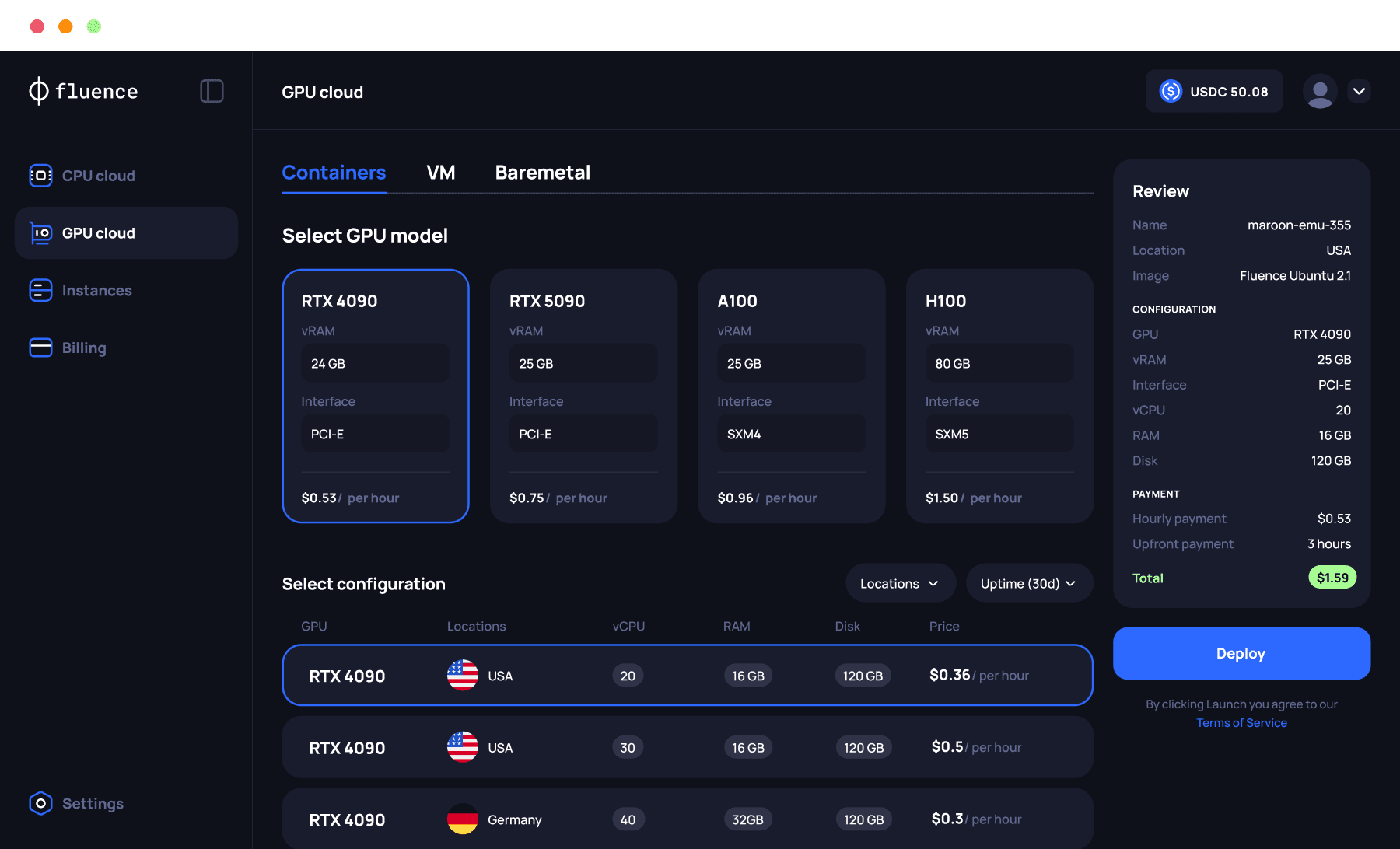
- 4. Monitoring & Optimization: Track earnings, uptime, and performance via platform dashboards; optimize for peak passive income.
I've guided portfolios through similar ramps, blending on-chain metrics with uptime logs. Yields compound as networks like IonDEX match you to developers, Salad. io gamifies rewards. Expect initial ramps of 20-30% utilization, scaling to 60% with refinements.
Navigating Risks in the Decentralized GPU Rental Guide
No yield lacks friction. Electricity volatility erodes margins; hedge with off-peak scheduling. Downtime from jobs risks slashing payouts - aim for 99% uptime via redundancies. Token price swings? Platforms like io. net mitigate via adaptive engines, dynamically pricing against fixed models. Security looms large: Use hardware enclaves, never expose wallets. Regulatory haze around DePIN? It favors permissionless access, but track jurisdiction-specific rules. In my 12-year lens, risks pale against 15-25% returns, diversified across platforms. Gpumarketdepin. com's trustless verification minimizes bad actors, ensuring decentralized GPU rental guide reliability.
From idle compute to programmable capital: Networks pool resources for scalable AI, rendering, and edge tasks.
Compare to centralized alternatives: AWS premiums devour 50% of budgets, while DePIN captures that value for providers. Salad's crypto conversions add liquidity, DePINed's bandwidth bundling boosts earnings 15-20%.
RTX 4090 Monthly Earnings Comparison (50% Utilization, Net after $0.10/kWh Electricity)
| Platform | Estimated Monthly Earnings |
|---|---|
| io.net | $400-500 💰 |
| Aethir | $350-450 💰 |
| gpumarketdepin.com | $450-550 💰 |
Future-Proofing Your Passive Income GPU Marketplace 2026 Strategy
2026 accelerates: AI hyperscalers demand 10x supply, per io. net forecasts. Cluster with like-minded providers via gpu. net or Render for hyperscale bids. Tokenomics evolve - ShareAI's pricing models predict upside as adoption swells. NVDA's steady climb to $189.82 validates NVIDIA's moat, but diversify into AMD for cost plays. Gpumarketdepin. com positions ahead, fusing Render's rendering prowess with io. net's scale for all workloads. Early adopters today harvest tomorrow's premiums; hybrid intelligence demands action now.
Providers who blend technical rigor with on-chain savvy thrive. Your RTX rig, once sidelined, now anchors decentralized futures. Join gpumarketdepin. com, set rates, watch earnings accrue - passive income redefined in DePIN's engine.


No comments yet. Be the first to share your thoughts!