

As we navigate the macro trends of 2026, idle GPU owners confront a strategic pivot: transforming dormant hardware into steady crypto earnings through DePIN GPU rental. With AI inference workloads exploding, platforms like Fluence Network, io. net, and Aethir have matured into robust decentralized GPU marketplaces, offering idle GPU passive income at scales once confined to hyperscalers. This isn't a speculative chase; it's a calculated play on compute liquidity, where supply meets surging demand for real-time AI processing.
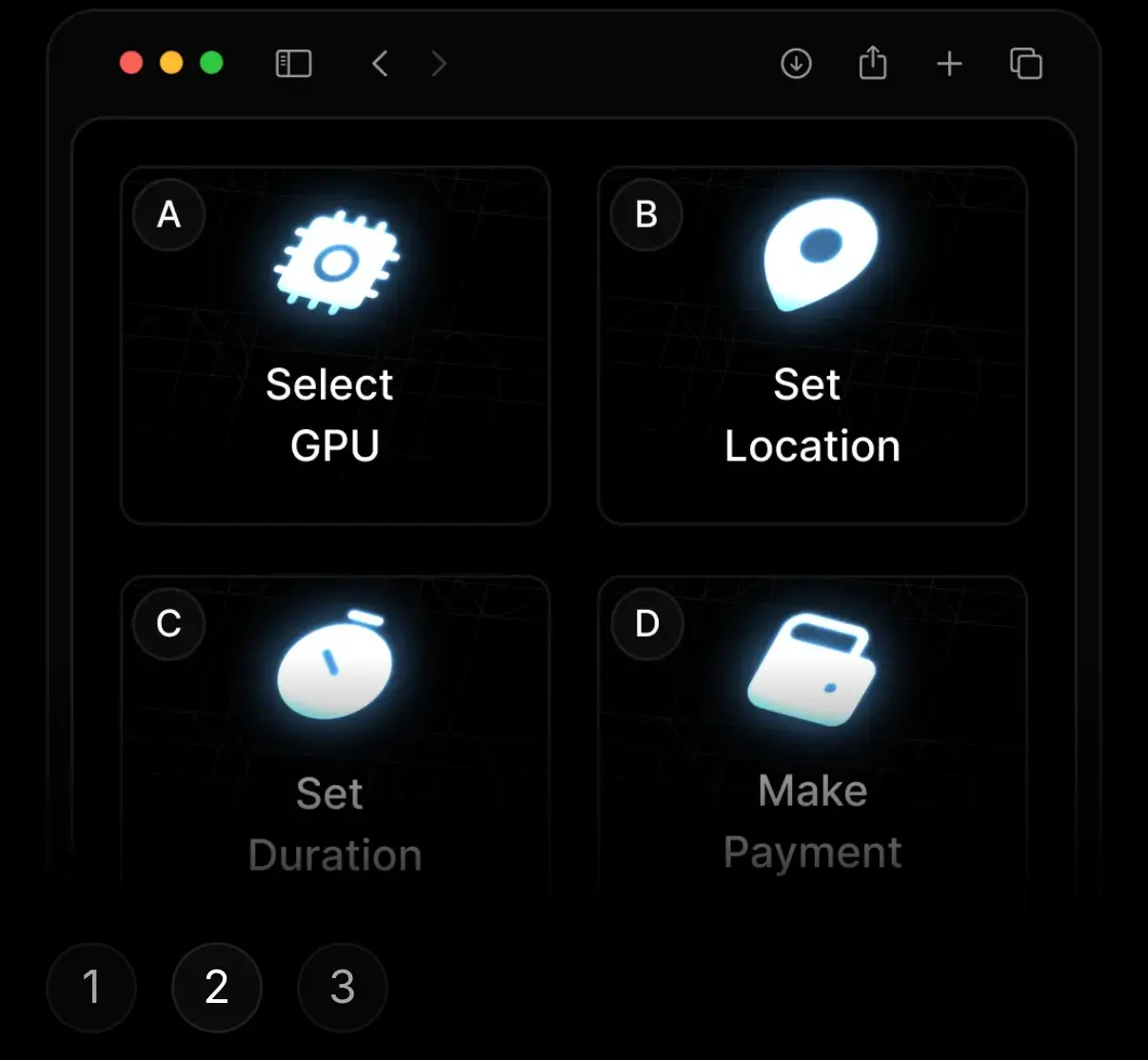
I've watched bonds and equities through multiple cycles, and the DePIN compute sector echoes the resilient infrastructure builds of yesteryear. Platforms pool underutilized GPUs from data centers, miners, and individual rigs, creating a decentralized GPU marketplace that undercuts centralized giants by 70-85%. Providers set rates, earn passively via automated payouts in tokens like IO or ATH, and contribute to everything from agent inferencing to climate simulations. Yet, success demands discernment; not all networks deliver verifiable revenue.
Fluence Network: Enterprise-Grade Entry for AI Workloads
Fluence Network (FLT) stands out with its Cloudless marketplace, delivering GPU cloud services at $2.56 per hour for H200 virtual machines - a fraction of Azure or AWS rates hovering at $6-12 per hour. This transparency extends to daily billing, containers, VMs, and bare-metal options, all in GDPR, ISO 27001, and SOC 2 compliant facilities. For GPU owners, Fluence enables rent GPUs for AI inference with on-demand, spot, and API deployments, fostering trust in a sector often plagued by opacity.
Strategically, Fluence bridges DePIN's promise with enterprise realities, allowing providers to monetize idle compute without the overhead of full-time management. It's a conservative bet: lower costs attract developers, swelling demand for your hardware.
io. net's Explosive Growth in Decentralized Compute
io. net (IO), built on Solana, has scaled to 6,720 verified GPUs by early 2025, boasting a 445% growth since 2024 and over $20 million in annualized Total Network Earnings (TNE) by October 2025. This open-source AI infrastructure lets providers set custom rates for ML clusters, delivering 70% cost savings over traditional clouds. Integrations with Gaia for agent inferencing and Injective for DeFi AI underscore its real-world traction.
Reflecting on this trajectory, io. net's adaptive economic engine - the IDE - dynamically balances emissions, sidestepping the pitfalls of rigid models. For those eyeing crypto earnings idle compute 2026, io. net exemplifies sustainable monetization: passive income from home rigs powering inference tasks, verified on-chain.
DePIN GPU Marketplace Cryptocurrencies: 6-Month Price Performance
io.net (IO) vs. Key Competitors and Benchmarks in Compute DePIN Sector (Real-Time Data as of 2026-02-06)
| Asset | Current Price | 6 Months Ago | Price Change |
|---|---|---|---|
| io.net (IO) | $0.1049 | $0.1413 | -25.8% |
| Render Network (RENDER) | $1.26 | $1.48 | -14.9% |
| Akash Network (AKT) | $0.2813 | $0.3259 | -13.7% |
| Golem (GLM) | $0.1833 | $0.2097 | -12.6% |
| Nosana (NOS) | $0.1716 | $0.1856 | -7.5% |
| Bittensor (TAO) | $164.50 | $185.73 | -11.4% |
| Bitcoin (BTC) | $65,116.00 | $71,734.00 | -9.2% |
| Ethereum (ETH) | $1,901.39 | $2,139.54 | -11.1% |
Analysis Summary
Over the past six months, the cryptocurrency market has been bearish, with io.net (IO) experiencing the largest decline at -25.8%, underperforming peers like Nosana (NOS) at -7.5% and benchmarks Bitcoin (-9.2%) and Ethereum (-11.1%). DePIN compute assets show varied but negative returns amid growing AI inference demand.
Key Insights
- io.net (IO) has the most significant 6-month decline at -25.8%, highlighting sector volatility.
- Nosana (NOS) demonstrates relative resilience with only a -7.5% drop.
- All listed DePIN assets and major cryptocurrencies posted negative returns, aligning with broader market downturn.
- Bitcoin and Ethereum serve as stable benchmarks, declining 9.2% and 11.1% respectively.
Prices and changes sourced exclusively from provided real-time CoinMarketCap data (last updated 2026-02-06T07:23:13Z). 6-month prices reference approximately 2025-08-10. Percentage changes formatted as provided.
Data Sources:
- Main Asset: https://coinmarketcap.com/currencies/io-net/
- Render Network: https://coinmarketcap.com/currencies/render/
- Akash Network: https://coinmarketcap.com/currencies/akash-network/
- Golem: https://coinmarketcap.com/currencies/golem/
- Nosana: https://coinmarketcap.com/currencies/nosana/
- Bittensor: https://coinmarketcap.com/currencies/bittensor/
- Bitcoin: https://coinmarketcap.com/currencies/bitcoin/
- Ethereum: https://coinmarketcap.com/currencies/ethereum/
Disclaimer: Cryptocurrency prices are highly volatile and subject to market fluctuations. The data presented is for informational purposes only and should not be considered as investment advice. Always do your own research before making investment decisions.
Aethir: Scaling for AI and Gaming with Proven Revenue
Aethir (ATH), now with a $191 million market cap post-Coinbase listing, reported $39.8 million in Q3 2025 revenue, partnering with over 100 ecosystems including iExec for confidential AI. Providers benefit from up to 86% cost savings for renters, translating to higher utilization for your GPUs. A Q4 2025 mainnet upgrade bolsters L1/L2 compatibility and security, positioning Aethir for enterprise gaming and inference loads.
From a long-term investor's lens, Aethir's case studies reveal the power of tokenized incentives: idle gaming GPUs repurposed for decentralized AI, yielding steady token accruals. Yet, as Nvidia H100 cloud prices dip to $2.99 per hour in Q1 2026 - down 64-75% from late 2024 - owning hardware at $25,000-$30,971 per unit demands platforms that maximize uptime and QoS.
These leaders - Fluence, io. net, Aethir - form the vanguard of DePIN GPU rental, but strategic entry requires weighing bare-metal verification, latency SLAs, and network cold starts. Providers must prioritize platforms with cryptoeconomic proofs to ensure earnings match dashboards.
Verification failures, like those highlighted in io. net dashboards promising $847 monthly earnings only to falter under scrutiny, underscore the need for bare-metal proofs in DePIN GPU rental. Platforms must deliver on QoS guarantees, where AI inference tolerates no more than milliseconds of latency. From my vantage in macro trends, networks resolving these through zero-knowledge oracles and cryptoeconomic stakes will dominate, separating sustainable plays from hype-driven entrants.
Navigating Economic Realities: Ownership vs. Rental
Purchasing Nvidia H100s at $25,000-$30,971 per unit, plus cooling and power infrastructure, ties capital in volatile assets amid plunging cloud rates. H100 rentals hit $2.99 per hour in Q1 2026, a 64-75% drop from Q4 2024's $8-10 range. For sporadic workloads, renting via DePIN beats ownership; providers, however, flip this equation, leasing idle capacity for crypto earnings idle compute 2026. io. net's TNE surpassing $20 million annualized reflects network maturity, where utilization rates dictate returns. Aethir's $39.8 million Q3 revenue signals similar potential, but expect variance: home rigs may yield 20-50% uptime initially, scaling with demand.
DePIN GPU Marketplace Assets vs. Major Cryptocurrencies: 6-Month Price Performance
Price comparison amid bearish market sentiment (Data as of 2026-02-06)
| Asset | Current Price | 6 Months Ago | Price Change |
|---|---|---|---|
| io.net | $0.1048 | $0.1269 | -17.4% |
| Aethir | $0.0839 | $0.1000 | -16.1% |
| Fluence | $0.004264 | $0.005000 | -14.7% |
| Render Network | $1.26 | $1.50 | -16.0% |
| Akash Network | $0.2809 | $0.3200 | -12.2% |
| Bittensor | $164.42 | $180.00 | -8.7% |
| Golem | $0.1831 | $0.2000 | -8.5% |
| Bitcoin | $65,068.00 | $110,500.00 | -41.1% |
| Ethereum | $1,895.85 | $4,279.00 | -55.7% |
Analysis Summary
Over the past six months, all tracked assets have declined in value amid a broader bearish cryptocurrency market. DePIN-related tokens like io.net, Aethir, and Fluence have shown relatively milder drops (-8.5% to -17.4%) compared to majors Bitcoin (-41.1%) and Ethereum (-55.7%), highlighting sector resilience despite positive revenue growth in DePIN platforms.
Key Insights
- DePIN compute tokens (e.g., Bittensor -8.7%, Golem -8.5%) exhibited the smallest 6-month declines.
- io.net declined 17.4%, outperforming Bitcoin and Ethereum significantly.
- Ethereum experienced the sharpest drop at -55.7%, reflecting heavy altcoin pressure.
- Overall market downtrend aligns with reported data, yet DePIN revenues (e.g., io.net $20M annualized, Aethir $39.8M Q3) suggest underlying fundamentals.
Real-time prices and 6-month historical data (from ~2025-08-10) sourced exclusively from provided market data via CoinLore, CoinDesk, and CoinGecko. Changes calculated as ((Current - Past)/Past * 100), formatted precisely as given. Last updated 2026-02-06.
Data Sources:
- Main Asset: https://www.coinlore.com/coin/io-net
- Bitcoin: https://www.coindesk.com/markets/2025/09/05/ether-leads-crumbling-crypto-prices-in-shocking-reversal-from-early-rally
- Ethereum: https://www.coindesk.com/markets/2025/09/05/ether-leads-crumbling-crypto-prices-in-shocking-reversal-from-early-rally
- Render Network: https://www.coingecko.com/en/coins/render-token/historical_data
- Aethir: https://www.coingecko.com/en/coins/aethir/historical_data
- Fluence: https://www.coingecko.com/en/coins/fluence/historical_data
- Akash Network: https://www.coingecko.com/en/coins/akash-network/historical_data
- Bittensor: https://www.coingecko.com/en/coins/bittensor/historical_data
- Golem: https://www.coingecko.com/en/coins/golem/historical_data
Disclaimer: Cryptocurrency prices are highly volatile and subject to market fluctuations. The data presented is for informational purposes only and should not be considered as investment advice. Always do your own research before making investment decisions.
Strategically, diversify across Fluence for enterprise stability, io. net for ML volume, and Aethir for gaming inference. Token exposure - IO, ATH, FLT - hedges compute bets, but treat as cycle plays, not moonshots. My bond background favors platforms with adaptive economics like io. net's IDE, adjusting incentives real-time to avert cold starts.
Practical Entry: Monetizing Your Hardware Today
Idle GPU passive income beckons, yet demands preparation. Assess your rig: consumer cards like RTX 4090s suit inference; enterprise H100s/H200s command premiums. Ensure stable internet, UPS backups, and compliance with platform specs. Platforms verify via on-chain proofs, rewarding reliable nodes with priority jobs.
Strategic Guide: Monetize Idle GPUs on DePIN Platforms in 2026
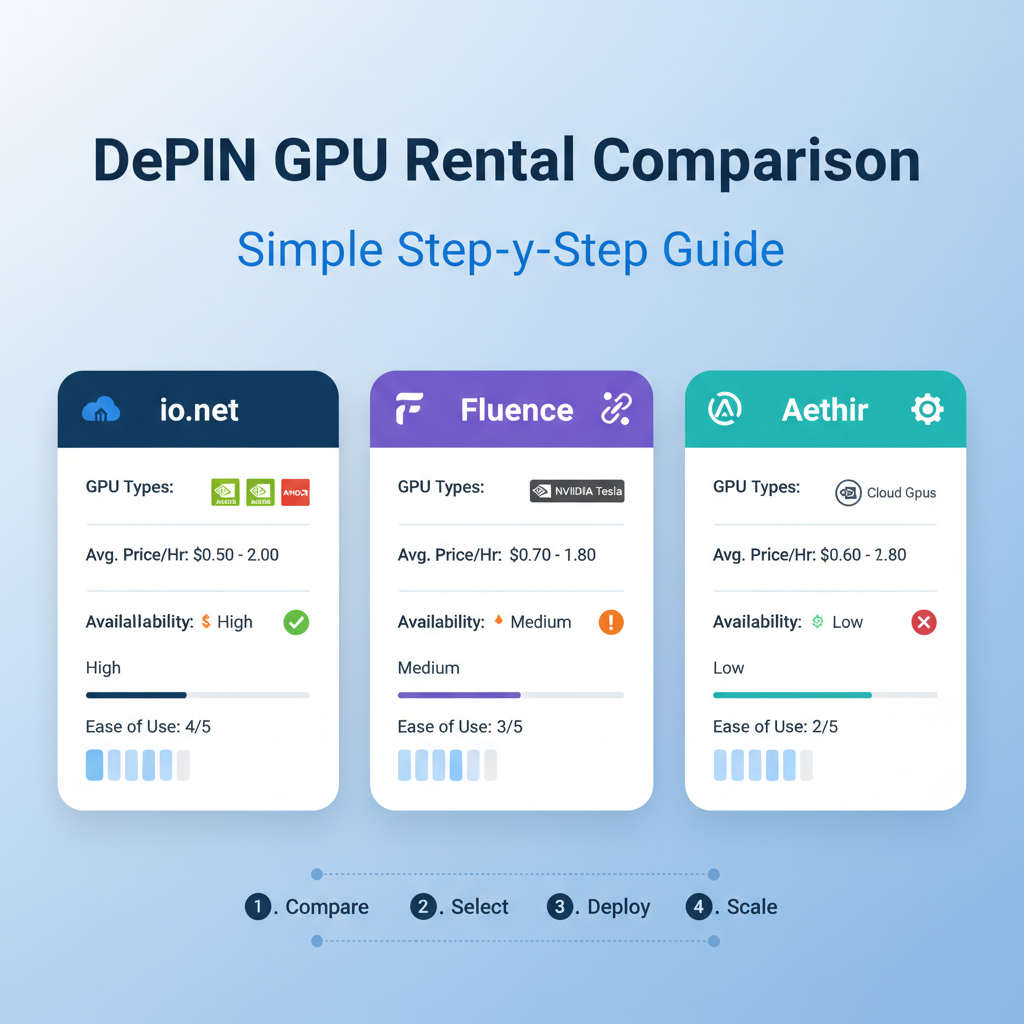
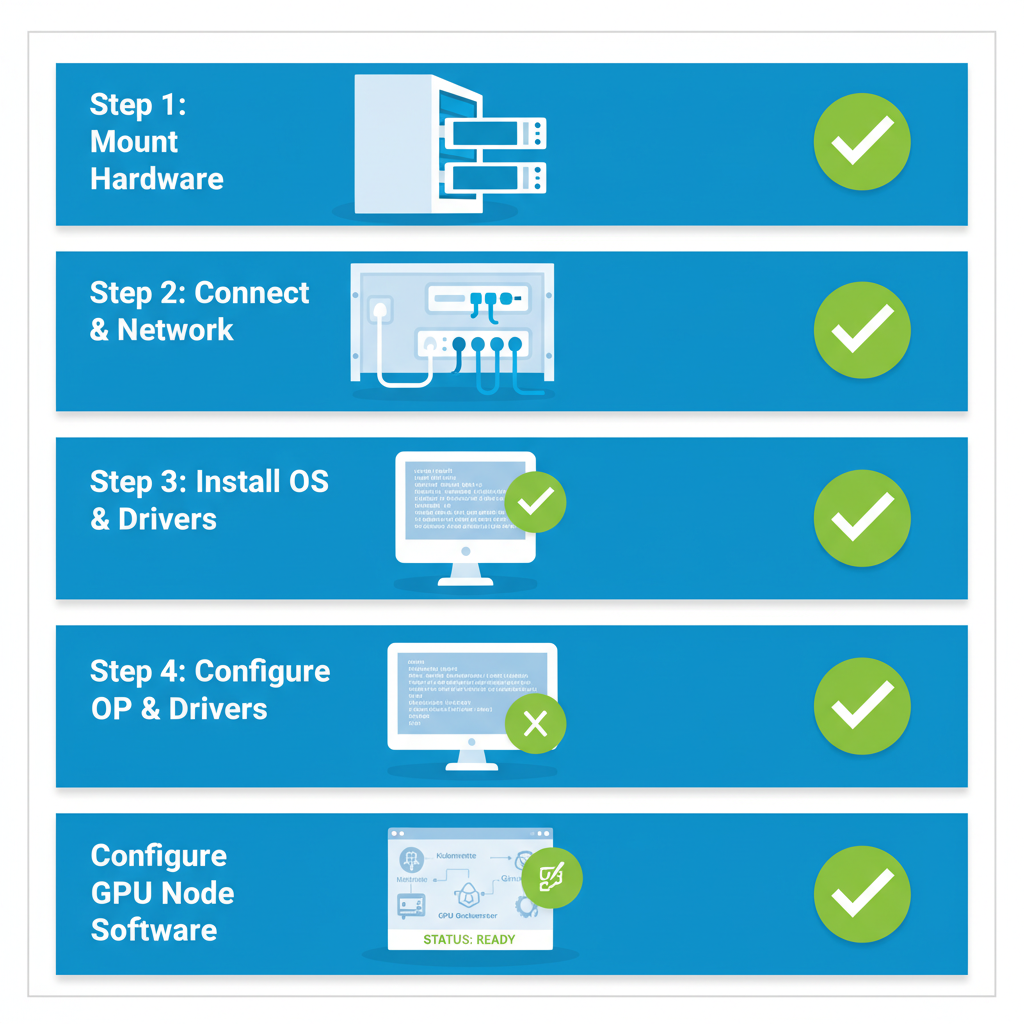
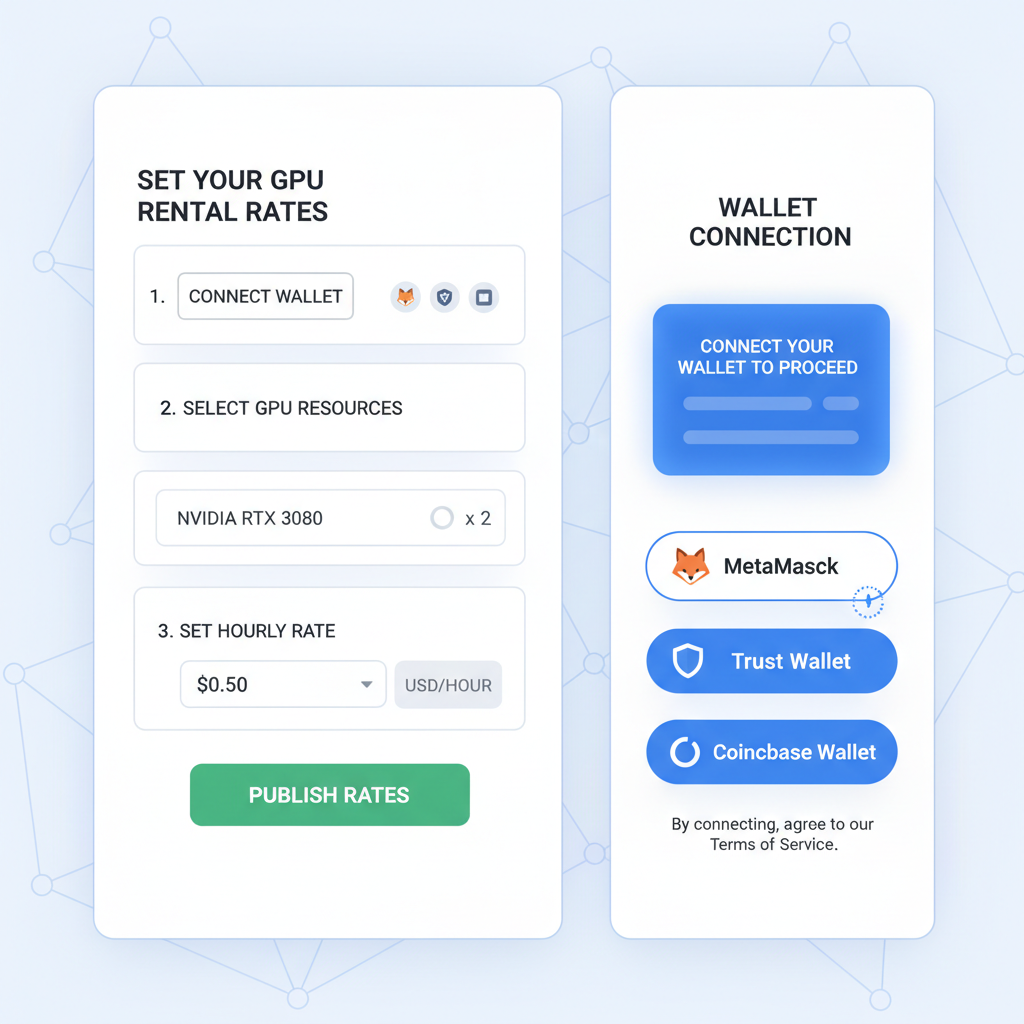
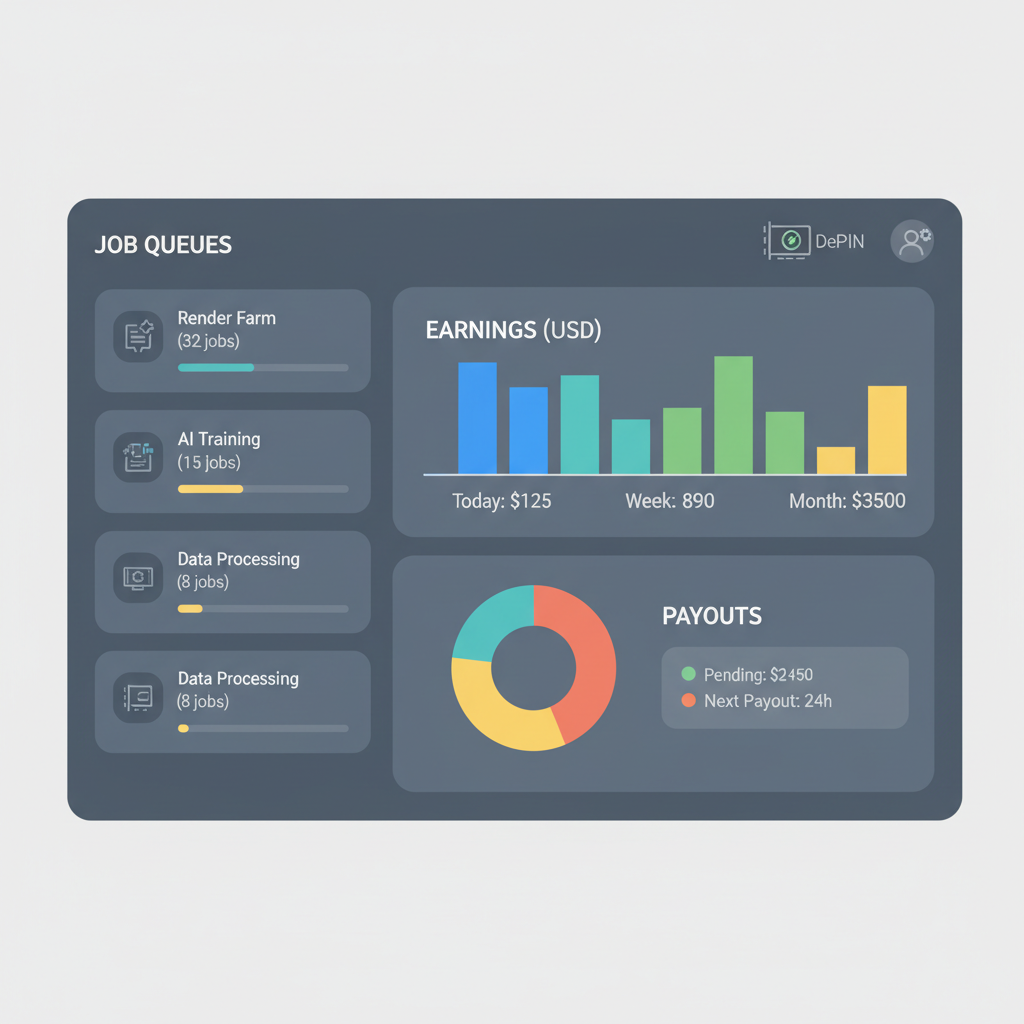
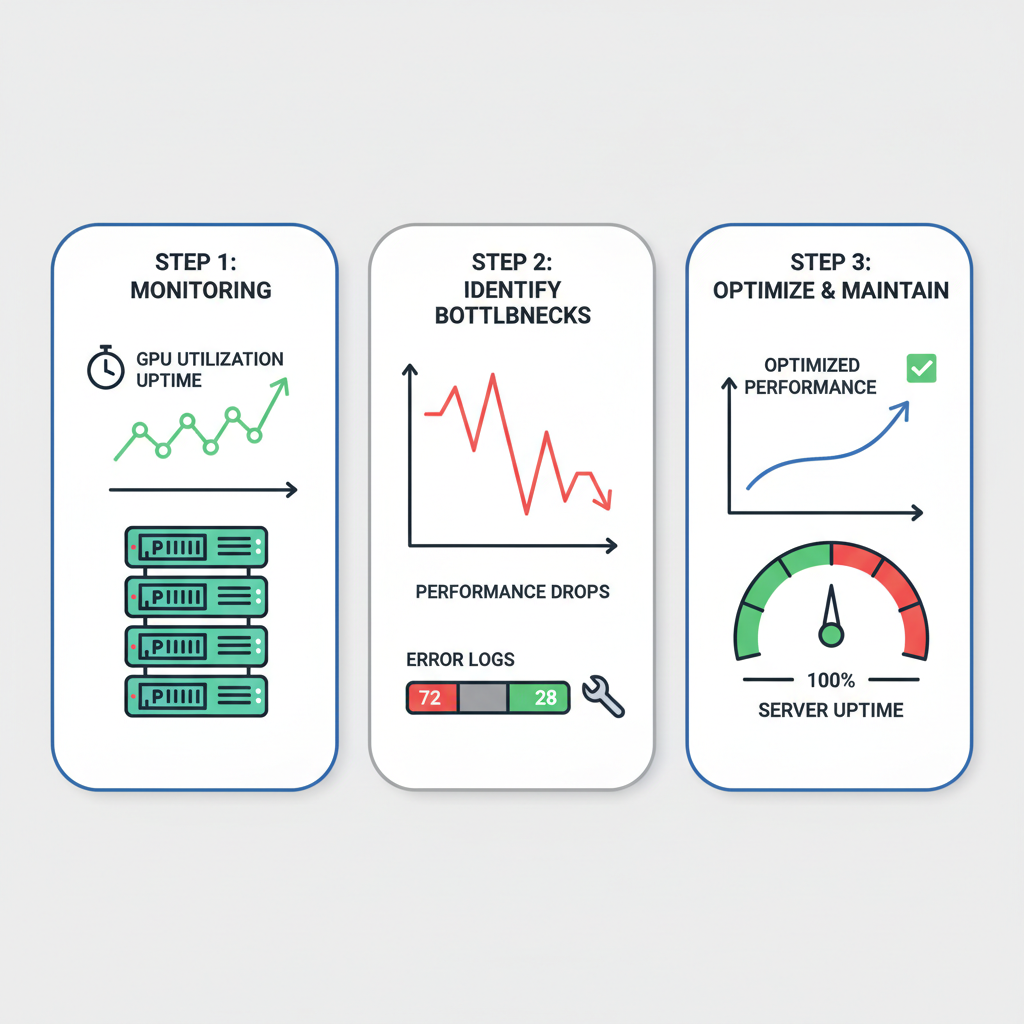
This process, honed across cycles, transforms hardware into assets yielding 10-30% annualized returns on capex, outpacing many equities in low-vol environments. Start small: one GPU tests waters before scaling clusters.
Idle compute isn't free money; it's infrastructure arbitrage, capturing AI's insatiable hunger through decentralized rails.
Interoperability lags fragment the ecosystem, but unified stacks loom, easing developer shifts between Fluence VMs and io. net clusters. Reputation systems, bolstered by oracles, will curate top providers, elevating earnings for verified hardware. As DePIN matures, expect regulatory nods for compliant facilities, unlocking institutional flows.
GPU owners stand at compute's inflection: join vetted networks, prioritize verifiable uptime, and cycle tokens strategically. Platforms like these don't just rent GPUs for AI inference; they architect the next infrastructure layer, rewarding patient builders over fleeting speculators. With demand outstripping supply through 2026, now positions idle rigs for enduring gains in a tokenized compute economy.



No comments yet. Be the first to share your thoughts!