
Render Network's RNDR token just rocketed 59.10% in the last 24 hours to $2.44, signaling a massive resurgence in DePIN 3D rendering GPUs. This isn't just hype; it's proof that decentralized GPU marketplaces like gpumarketdepin. com are reshaping how 3D artists tackle complex workflows in 2026. With global GPU shortages biting hard, platforms pooling idle RTX GPUs and enterprise beasts like H200s and MI300X are delivering scalable, cost-effective power right when creators need it most.
I've been swing trading these DePIN swings for a decade, and this momentum mirrors the compute cycle we rode with Render and io. net last year. Artists waiting weeks for cloud renders? Forget it. gpumarketdepin connects you to a trustless P2P network of GPUs worldwide, slashing costs by up to 70% compared to AWS or centralized providers. Think Blender scenes rendering in hours, not days, without upfront hardware investments.
Decentralized GPUs Crush Traditional Bottlenecks for 3D Studios
By early 2026, Render Network's Dispersed. com has onboarded over 5,600 node operators hitting 85-95% utilization, processing 65 million frames. Akash reports 428% YoY growth, integrating Blackwell GPUs for on-chain AI. gpumarketdepin. com builds on this, offering DePIN 3D rendering GPUs optimized for creative pros. No more vendor lock-in or skyrocketing TCO; vendor-agnostic benchmarks from io. net guides show H100s and MI300X dominating AI-adjacent renders too.

Picture this: your studio scales from a single RTX 4090 job to a 100-GPU cluster in minutes. gpumarketdepin's real-time marketplace matches your decentralized rendering workflow 2026 needs instantly, with smart contracts ensuring fair payouts to providers. High utilization means reliable throughput, even during peak Hollywood rushes like RenderCon 2026 at Nya Studios.
Blender Renders Supercharged on gpumarketdepin Marketplace
For Blender users, gpumarketdepin Blender render integration is a game-changer. Upload your. blend file, select RTX GPUs for 3D on marketplace, and watch Octane 2026-style realism unfold via decentralized nodes. It's not theory; Render's pivot to AI compute proves mixed workloads thrive here. I timed my RNDR entry last month on Fibonacci support, and at $2.44, it's primed for more upside as brands chase autonomous AI experiences.
Render Network (RNDR) Price Prediction 2027-2032
Projections based on AI compute pivot, decentralized GPU adoption, and enterprise hardware integration amid GPU shortages
| Year | Minimum Price | Average Price | Maximum Price | YoY Growth (from Prev. Avg.) |
|---|---|---|---|---|
| 2027 | $4.50 | $7.20 | $11.50 | +16% (Bullish adoption surge) |
| 2028 | $6.00 | $10.50 | $18.00 | +46% (AI model training boom) |
| 2029 | $8.50 | $15.00 | $25.00 | +43% (Enterprise GPU scaling) |
| 2030 | $12.00 | $22.00 | $35.00 | +47% (DePIN market dominance) |
| 2031 | $16.00 | $30.00 | $48.00 | +36% (Regulatory clarity & halvings) |
| 2032 | $20.00 | $42.00 | $65.00 | +40% (Mass AI/3D rendering adoption) |
Price Prediction Summary
RNDR is forecasted to experience robust growth from its 2026 baseline of ~$5-8, driven by the shift to AI compute workloads and high-utilization decentralized GPU networks. Average prices could climb to $42 by 2032 in optimistic scenarios, with min/max reflecting bearish corrections and bullish market cycles.
Key Factors Affecting Render Network Price
- AI compute pivot expanding beyond 3D rendering to model training/inference
- Onboarding enterprise GPUs like NVIDIA H200 and AMD MI300X boosting credibility
- High network utilization (85-95%) and 5,600+ node operators signaling demand
- Global GPU shortage addressed by DePIN platforms like Render, io.net, Akash
- Upcoming RenderCon 2026 and Octane updates enhancing ecosystem momentum
- Crypto market cycles, Bitcoin halvings, and regulatory developments in DeFi/AI
- Competition and tech advancements in scalable P2P GPU marketplaces
Disclaimer: Cryptocurrency price predictions are speculative and based on current market analysis. Actual prices may vary significantly due to market volatility, regulatory changes, and other factors. Always do your own research before making investment decisions.
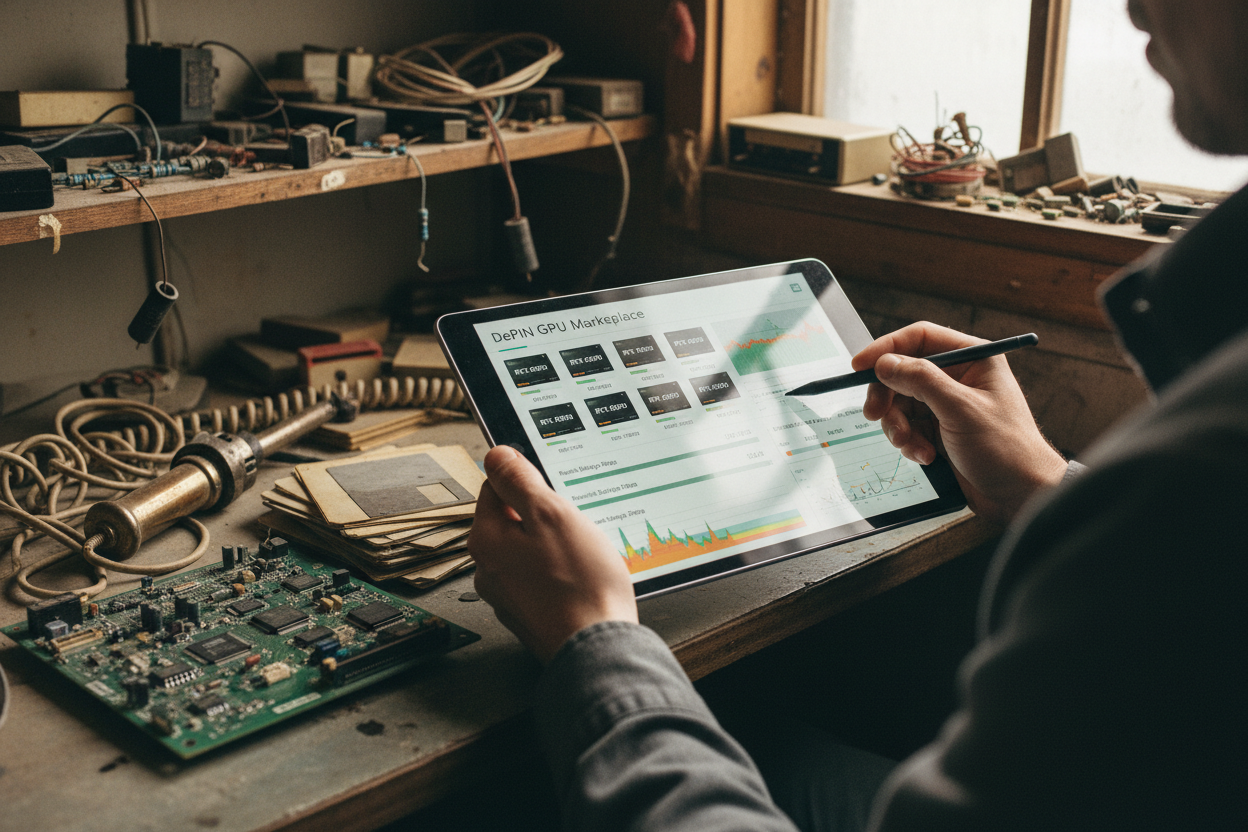
Workflow optimization starts with picking the right hardware mix. gpumarketdepin dashboards let you filter by VRAM, CUDA cores, even power efficiency for sustainable renders. Step one: benchmark your scene's demands. A typical VFX frame might need 24GB VRAM; tap into global H200 pools without buying. Providers earn steady yield on idle rigs, creating a flywheel of supply.
Actionable Steps to Slash Render Times and Costs Today
Dive in with gpumarketdepin's SDK for seamless plugin hooks into Blender, Maya, or Unreal. First, wallet-connect and stake minimal collateral for priority queue access. Second, queue jobs with auto-scaling: start small, burst to 50 GPUs for finals. Third, monitor via live dashboards tracking frame progress and node health. Costs? Pennies per frame versus dollars on centralized clouds. Recent io. net cluster guides highlight TCO savings of 50-80% for similar setups.
This hybrid TA-news play has RNDR up 59% today, but gpumarketdepin users are already cashing in on efficiency gains. Studios report 3x faster turnarounds, freeing artists for iteration over waiting. As RenderCon hype builds, expect more enterprise adoption, pushing utilization higher and prices competitive.
No comments yet. Be the first to share your thoughts!